Editorial Summary
Styling successful monochrome outfits requires pairing distinct fabric textures within the same color family rather than matching exact dyes. A flat, single-fabric monochromatic look appears costume-like or washed out. Modern monochrome dressing combines contrasting light-reflective surfaces (mulberry silk, patent leather) with matte light-absorbing weaves (boiled wool, heavy cashmere, brushed twill). Modulating saturation across three complementary tonal shades (for example, pairing ivory, oatmeal, and camel, or slate grey, heather charcoal, and deep graphite) establishes visual depth, sharp architectural proportions, and understated authority across both casual and corporate settings.
Key Investment Takeaways
The Edit • 2026
The Three-Texture Rule Prevents Visual Flattening
Every cohesive tonal look requires three distinct surface finishes: one high-pile or open weave (chunky knit or bouclé), one structured planar matte (tailored wool or denim), and one smooth reflective accent (silk, satin, or polished calfskin).
Tonal Variation Trumps Identical Dye Lots
Trying to match synthetic polyester black to wool crepe black produces clashing undertones. Instead, embrace intentional contrast by mixing charcoal with slate, or ecru with biscuit cream.
Hardware and Leather Anchors Complete the Frame
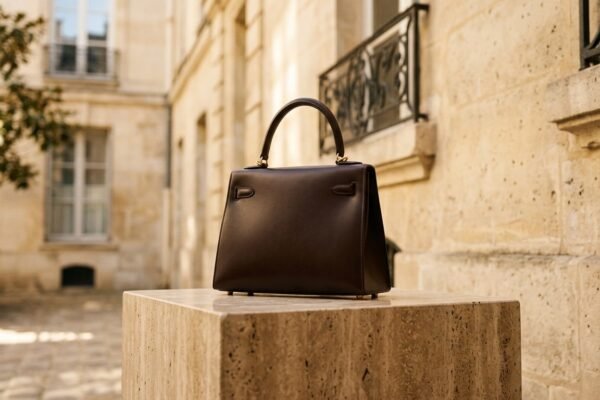
Monochrome outfits require clean perimeter lines. Ground flowing monochrome silhouettes with structured leather goods, disciplined belt breaks, and unadorned brass or silver hardware.
Monochrome dressing represents the ultimate exercise in architectural tailoring. When color is stripped of contrast, every structural element of a silhouette comes into sharp relief. Shoulder pads, lapel rolls, trouser breaks, and textile weaves must carry the entire visual weight of an outfit.
Yet many women struggle with monochrome styling because they attempt to match factory dyes perfectly. They wear a polyester blouse and wool trousers in slightly misaligned shades of navy, producing an accidental clash. True monochromatic mastery does not seek uniformity. It orchestrates deliberate tonal drift across high-character fabrics. As we observed in our foundational analysis of quiet luxury outfits, the most compelling ensembles rely on raw material integrity rather than loud logos.
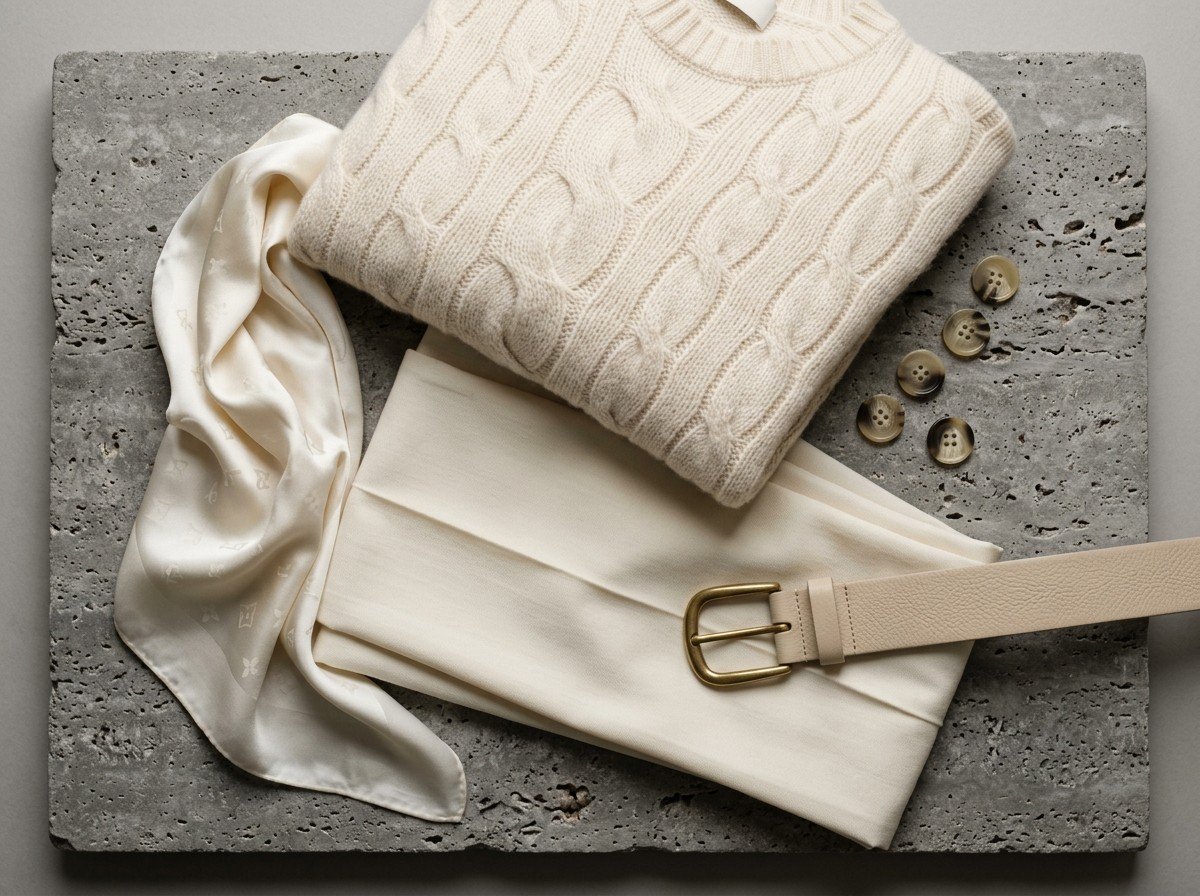
The Physics of Monochrome: Why Texture Creates Dimension
The secret to commanding a room in a single hue lies in light absorption and reflection. Flat cotton poplin absorbs light evenly, creating a two-dimensional visual plane. When you pair that poplin shirt with a ribbed cashmere knit, brushed flannel trousers, and polished box-calf leather boots, light bounces off each surface at distinct angles. The human eye reads these micro-shadows as structural depth.
According to historical archives documented by The Costume Institute at The Metropolitan Museum of Art, monochromatic tailoring was historically employed by master couturiers like Cristobal Balenciaga to emphasize pure sculpture over decorative surface distraction. By removing contrasting colors, the eye focuses on drape, hem sweep, and craftsmanship.
Contemporary fabric standards evaluated by textile industry standards from Textile Exchange emphasize the value of responsible wool, organic linen, and natural silks. These natural fibers accept botanical and low-impact dyes with unique depth, allowing different yarn counts to display natural variation that synthetic fibers cannot replicate.
When building an outfit from a single color family, always test the pieces under direct daylight. Artificial retail store lighting masks dye temperature discrepancies. A cool blue-toned grey trouser paired with a warm yellow-toned grey sweater looks discordant in morning sunlight. Ensure your pieces share the same undertone: either all warm or all cool.
The Monochrome Proportions Matrix: 2026 Master Guide
Before styling specific pieces, consider how silhouette volume distributes across the body. When your palette is unified, proportional balance dictates whether an outfit looks intentional or sloppy.
| Palette Family | Primary Textures | Key Silhouette Anchor | Footwear & Leather | Ideal Setting |
|---|---|---|---|---|
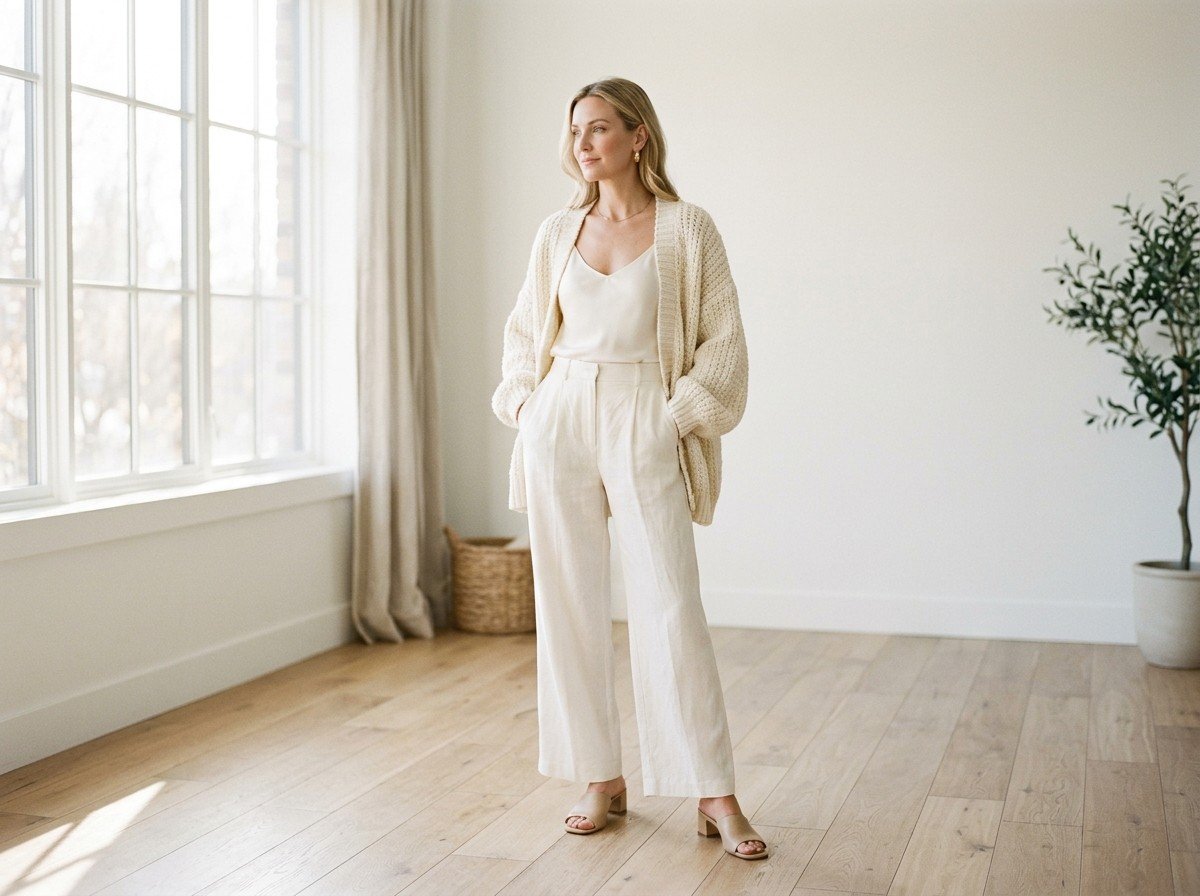
| Ivory & Oatmeal | Chunky cable knit, silk crepe, heavy linen | Wide-leg tailored trouser with sharp pleat | Buffed suede mules or ecru leather loafers | Weekend brunch, daytime gallery visits |
| Charcoal & Slate | Brushed wool melton, fine cashmere, wool twill | Full-length double-faced wool overcoat | Polished black calfskin ankle boots | Urban autumn commutes, board presentations |
| Deep Midnight Navy | Structured barathea wool, silk satin, poplin | Double-breasted sharp-shoulder blazer | Pointed navy suede pumps or patent flats | Executive corporate, formal client dinners |
| Espresso & Chocolate | Oiled suede, sandwashed silk, worsted wool | Relaxed unstructured suede jacket | Cognac burnished leather penny loafers | Casual luxury dining, creative meetings |
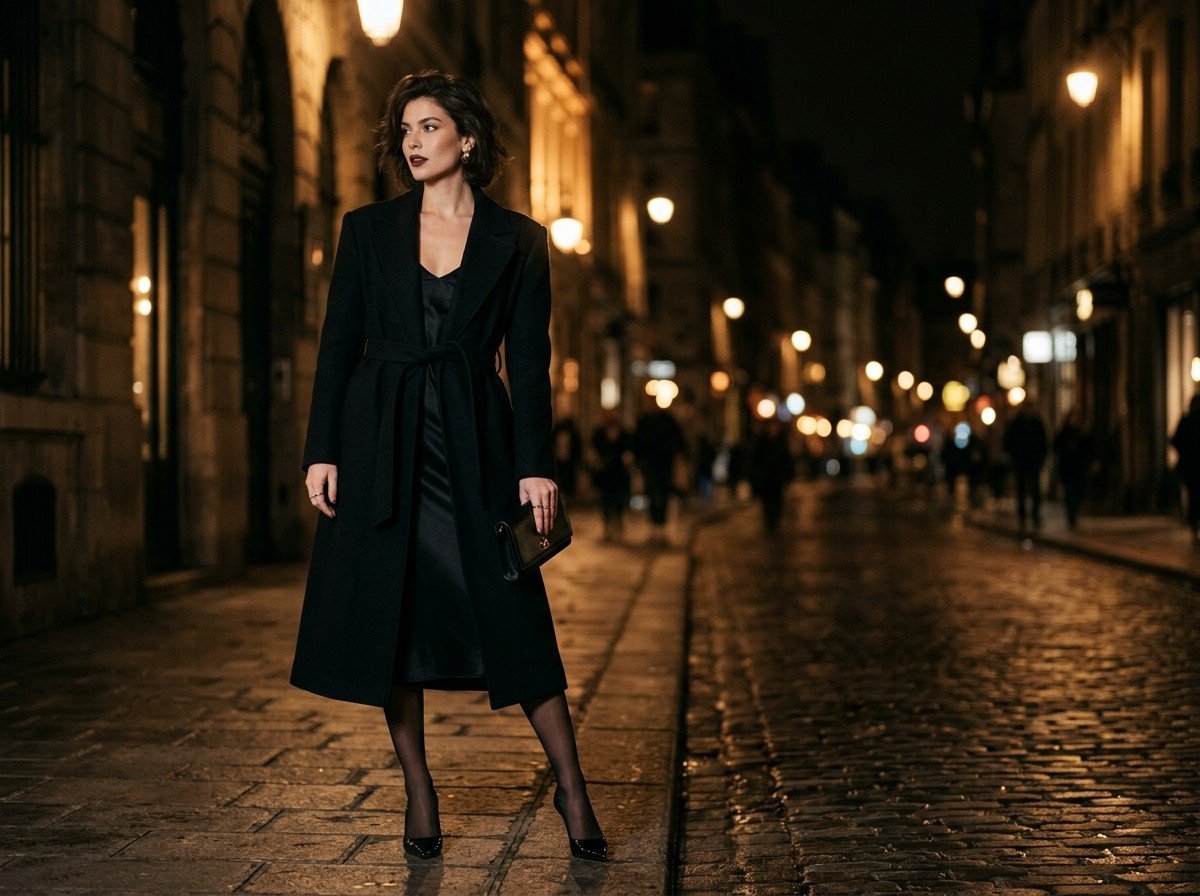
| Absolute Noir (Black) | Grain de poudre wool, heavy silk slip, shearling | Belted trench coat over bias-cut slip dress | Black patent stiletto heels, micro leather clutch | Evening theater, formal cocktail receptions |
| Sage & Olive Wood | Washed silk habotai, cotton twill, merino wool | Utility safari jacket with cinched belt | Olive leather chelsea boots, brass buckle belt | Transitional spring travel, casual weekends |
10 Tonal Layering Formulas Grounded in Texture
Here are 10 field-tested outfit formulas designed to elevate monochrome styling from basic color-matching into disciplined luxury. Each formula balances proportions, fabric weights, and leather accents.
1. The Architectural Charcoal Commute
Grey is the most versatile palette in modern tailoring because it contains natural mineral pigments. Rather than settling for a generic business suit, construct an ensemble using three gradations of slate, heather, and charcoal.
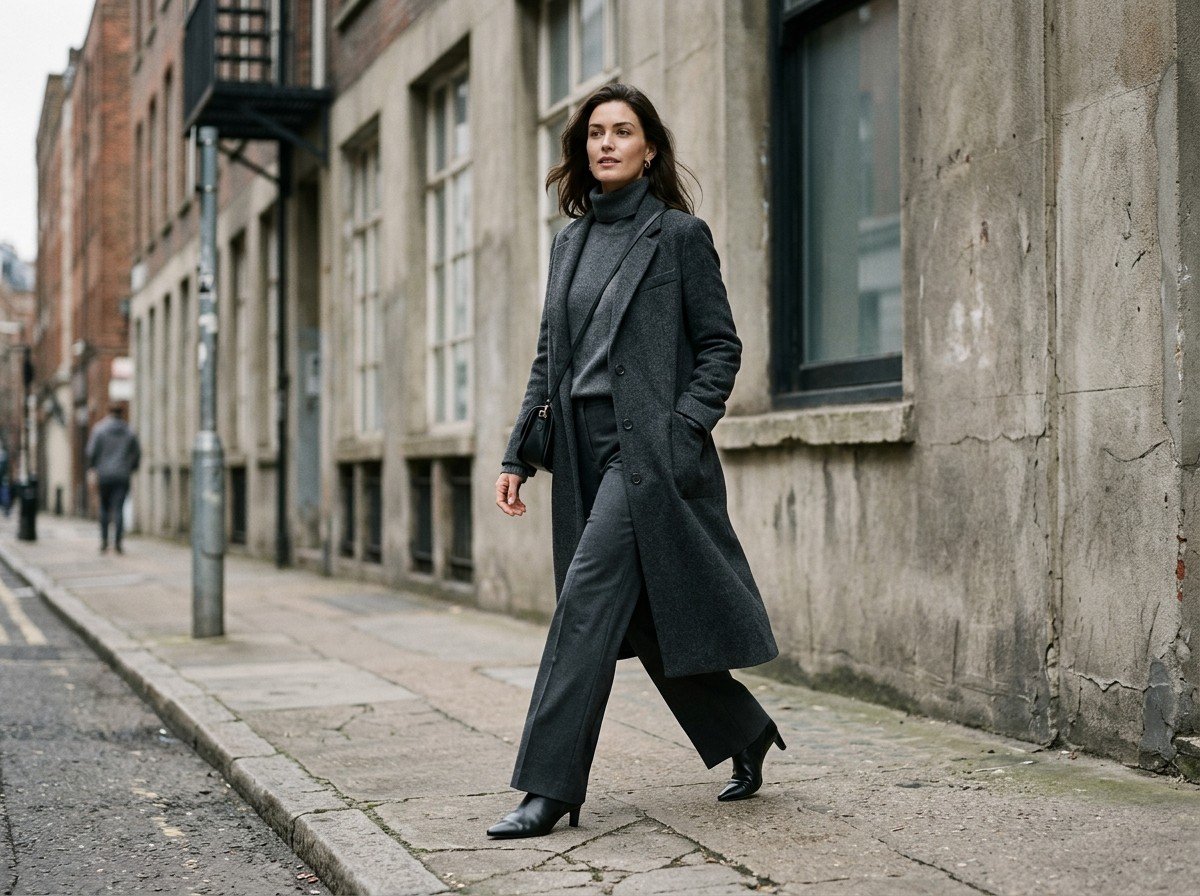
Begin with a high-gauge slate grey cashmere turtleneck that fits close to the collarbone. Layer over it an unlined double-faced charcoal wool overcoat with dropped shoulders. Anchor the bottom half with pleated charcoal wool trousers cut with a full break over black calfskin ankle boots. As detailed in our guide on how to style wide-leg trousers, a clean trouser hem break prevents voluminous tailoring from dragging visually.
The Edit • Style Notes & Proportions
- The Silhouette: Architectural longline coat balanced by a form-fitting fine-gauge knit and fluid wide trousers.
- Key Investment: 500 GSM double-faced virgin wool overcoat with horn buttons.
- Editor’s Tip: Add a slim black leather cross-body bag worn under the overcoat to break horizontal torso lines.
2. The Espresso Suede and Silk Pairing
Brown was once banished from formal fashion rules, yet rich chocolate and espresso tones currently represent the pinnacle of stealth wealth styling. Recent runway collections documented by Vogue demonstrate that warm monochrome earth tones provide softer flattering contrast against skin tones than harsh jet black.
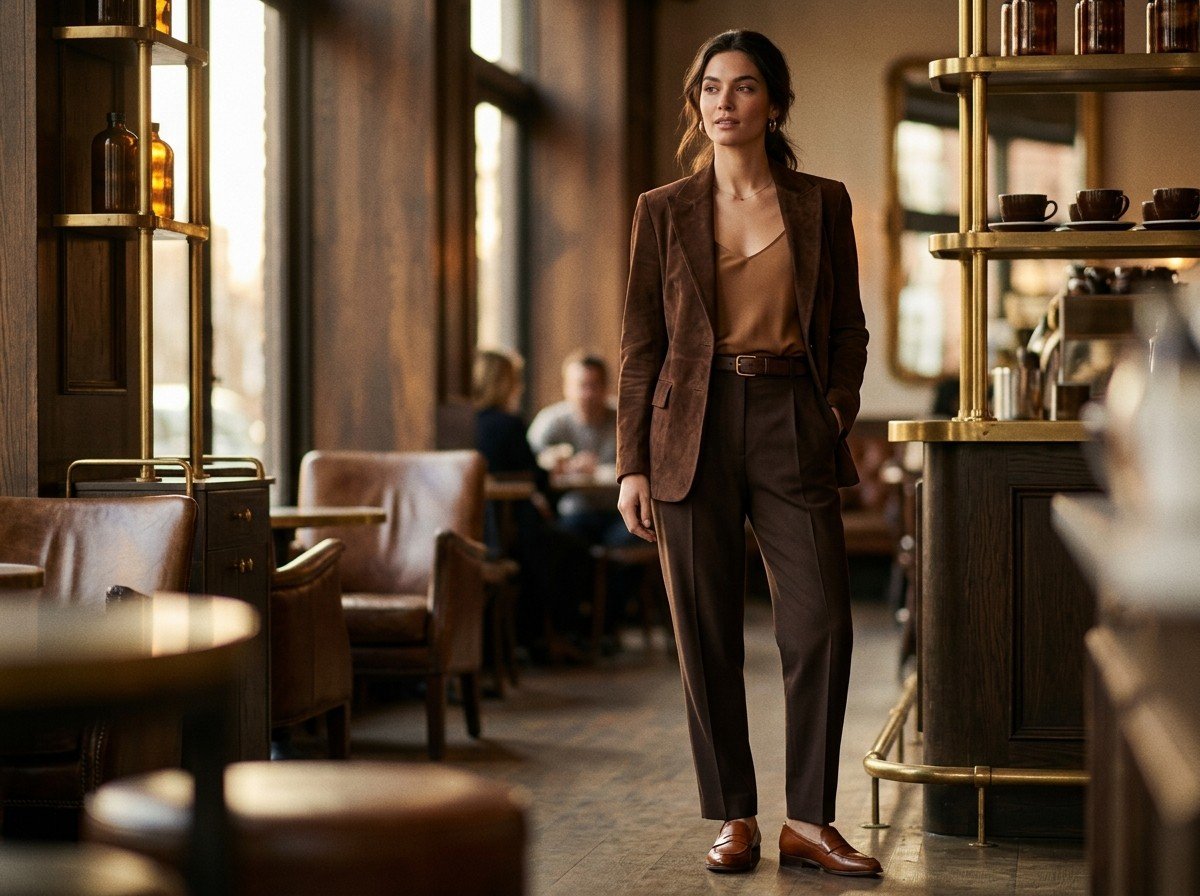
Combine a chocolate brown suede blazer with a caramel-toned silk camisole. Pair them with dark espresso tailored high-waisted cigarette trousers and cognac leather penny loafers. The napped texture of the suede absorbs light while the silk camisole reflects subtle warmth at the décolletage.
3. The Corporate Midnight Navy Column
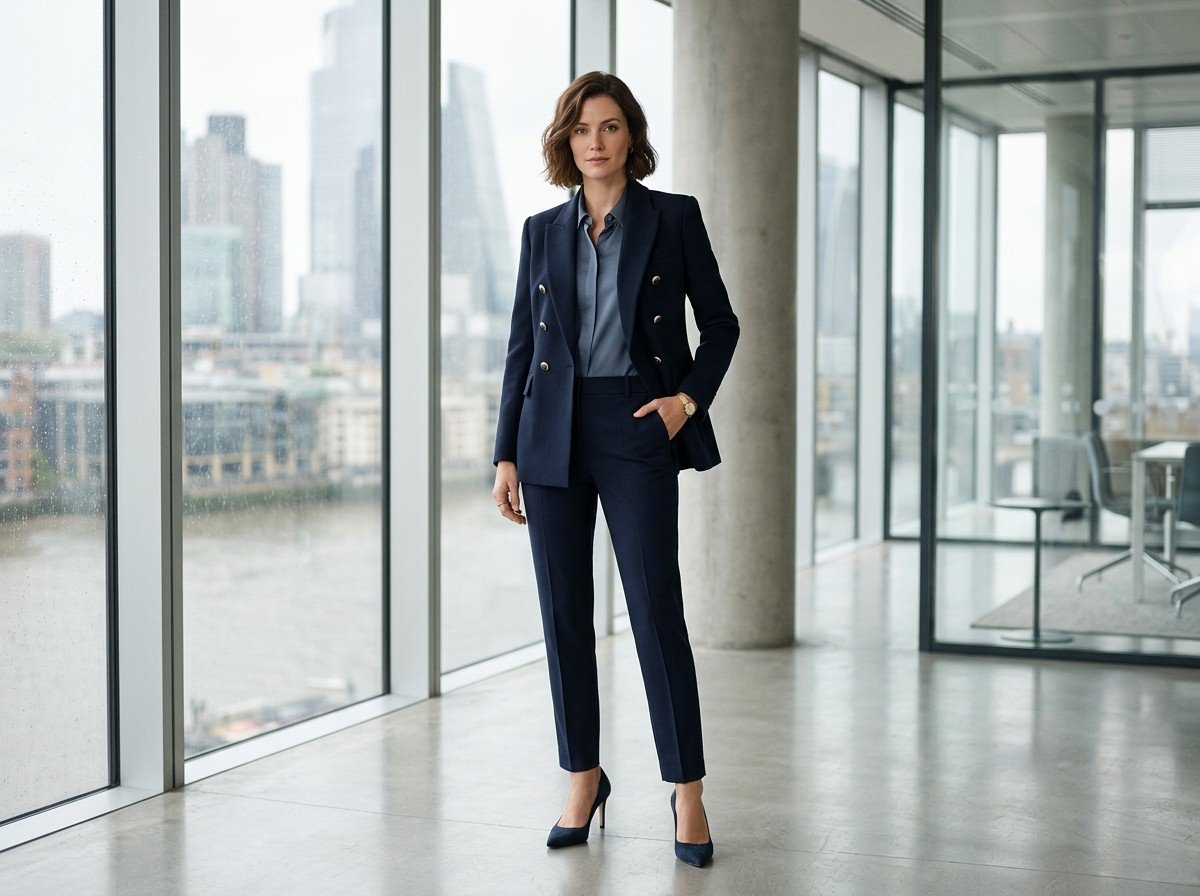
Navy monochrome projects intellectual authority without the stark severity of black suiting. For high-stakes presentations, build a vertical column of dark blue that elongates the frame.
Select a structured navy wool blazer with gold or horn buttons. Pair it with a slate blue silk habotai blouse and tailored navy trousers. When choosing inner layers for structured jackets, refer to our comprehensive recommendations on what to wear under a blazer to avoid collar bunching. Finish the look with navy suede pointed-toe pumps to sustain the unbroken vertical line.
4. The Noir Evening Bias Slip and Melton Coat
Wearing head-to-toe black can easily become flat and lifeless if executed in cheap synthetic jersey. To execute all-black styling at the highest level, contrast extreme weights: heavy outerwear against gossamer inner wear.
Layer a heavy, structured black melton wool coat over an unlined black 22-momme silk slip dress. Add sheer black 20-denier tights and high-shine patent leather pumps. The interplay between matte wool, fluid shimmering silk, transparent hosiery, and patent leather creates four separate light registers in a single shade.
5. The Warm Ivory and Alabaster Knit Ensemble
Winter whites and summer ivories convey immense luxury because they signal meticulous garment maintenance. An all-cream look feels luminous and relaxed when executed in tactile natural fibers.
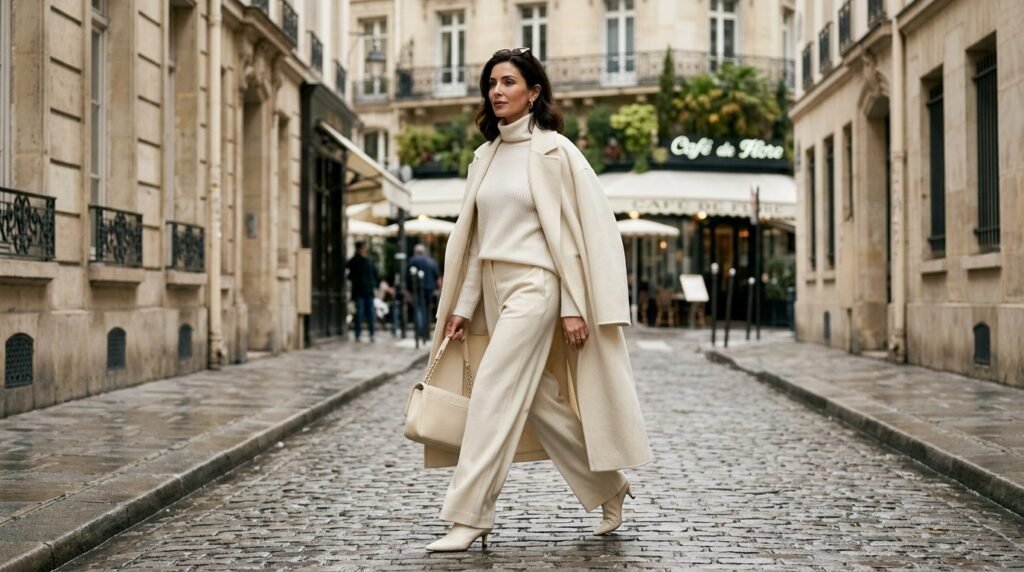
Pair a chunky fisherman-rib ivory cardigan with an unbleached silk camisole and wide-leg off-white linen or wool flannel trousers. Complete the outfit with beige calfskin mules. Mixing warm cream with crisp ivory prevents the look from feeling sterile like a medical uniform. This approach forms the foundation of our seasonal winter capsule wardrobe strategy.
6. The Camel Coat and Ribbed Turtleneck Standard
The camel coat remains an immortal garment in Parisian style. To avoid looking traditional, style it in full monochrome saturation rather than pairing it with standard blue jeans.
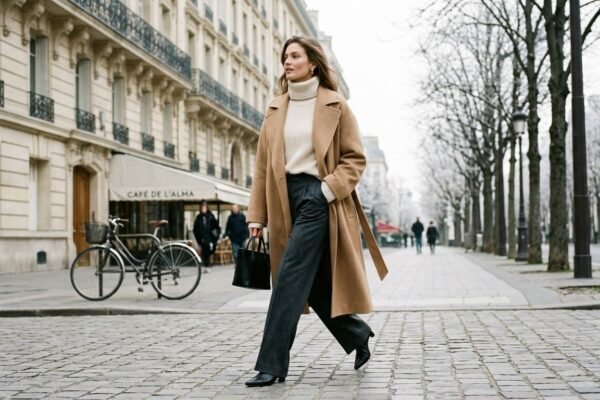
Layer a double-breasted camel wool coat over a tan ribbed knit turtleneck and tailored camel flannel trousers. Cinch the waist with a darker tan leather belt featuring an unadorned brass buckle. The slight shade variation between the camel outer layer and the biscuit inner knit establishes subtle sculptural definition across the torso.
7. The Sage and Olive Field Study
Muted olive and moss greens function as honorary neutrals in quiet luxury styling. They offer an organic earthy alternative to urban greys while preserving total wardrobe versatility.
Select an olive brushed-cotton utility jacket with clean concealed plackets. Wear it over a sage green fine-gauge merino wool crewneck and washed olive cargo trousers tailored with crisp center creases. Ground the ensemble with dark forest leather chelsea boots.
8. The Deep Oxblood and Burgundy Salon
Burgundy and wine tones convey rich historical gravitas. Because deep red shades absorb light heavily, balancing matte and high-gloss finishes is critical to prevent the outfit from appearing muddy.
Pair a tailored burgundy wool blazer with a plum silk button-down blouse and wine-toned tailored trousers. Incorporate a structured oxblood polished-leather shoulder bag and matching leather boots. The gleam of the leather surfaces keeps the rich red palette crisp and sharply defined.
9. The Ecru Poplin and Heavy Cotton Weekend
For relaxed Saturday dressing, monochrome white denim requires tactical softening. Crisp bleached white denim can feel rigid and harsh; ecru and raw cotton offer warm lived-in comfort.
Pair an oversized ecru cotton poplin boyfriend shirt with straight-leg unbleached ecru denim trousers. Drape an oatmeal cashmere sweater diagonally across the shoulders. Finish with minimalist white leather sneakers with gum soles. This look echoes the effortless sensibility codified in our French capsule wardrobe edit.
10. The Heather Grey Sweatshirt and Tailored Trouser Dynamic
High-low contrast represents the hallmark of modern street tailoring. Combining casual athletic jersey with formal bespoke suiting produces unexpected tension within a calm monochrome palette.
Tuck a loopback french terry grey sweatshirt into high-waisted pleated charcoal wool trousers. Add an unlined charcoal tailored blazer and grey suede pointed flats. The collegiate loopback cotton softens the austerity of the formal pleats while maintaining tonal unity.
The 4 Most Common Monochrome Mistakes and How to Fix Them
Mistake 1: Matching Identical Synthetic Fabrics
Wearing a polyester blouse with polyester trousers in the same color creates a flat uniform effect reminiscent of corporate hospitality attire. Fix this by always contrasting natural fibers: pair matte wool with lustrous silk, or brushed suede with crisp cotton poplin.
Mistake 2: Mixing Clashing Color Temperatures
Pairing a warm yellow-based cream with a cool blue-based optic white makes the cream piece look dirty and aged. Check undertones in natural sunlight. Keep your entire outfit consistently warm or consistently cool across every layer.
Mistake 3: Neglecting Vertical Perimeter Lines
When every piece shares one hue, poor tailoring breaks are magnified. Baggy hems pooling over rounded shoes shorten the visual frame. Use pointed-toe footwear, precise hem breaks, and unbuttoned longline coats to maintain crisp vertical geometry.
Mistake 4: Adding Distracting High-Contrast Accessories
Throwing a bright red bag onto an all-cream outfit shatters the serene sophistication of monochromatic dressing. Let your accessories participate in the tonal conversation. Choose an oatmeal suede tote, a camel leather belt, or buffed bone jewelry.
Frequently Asked Questions About Monochrome Outfits
What is the difference between monochrome and tonal dressing?
Monochrome technically refers to using one single color across an entire outfit (literally mono-chrome). Tonal dressing is a refined subcategory of monochrome where you incorporate varying values, tints, and saturations of that single color family, such as wearing ecru, biscuit, and camel together. Tonal styling is generally more flattering and accessible than strict single-saturation monochrome.
How do you make an all-black monochrome outfit look interesting?
To keep all-black outfits dynamic, apply the four-register texture rule. Combine matte textured wool (melton coat or flannel trousers), liquid reflective sheen (mulberry silk or satin slip), skin transparency (sheer hosiery or unlined lace), and high-gloss leather (patent pumps or polished calfskin bags). The light reflected across these four contrasting surfaces creates rich dimensional depth.
Can you wear monochrome outfits if you are petite?
Monochrome dressing is one of the most effective styling techniques for petite proportions. By eliminating horizontal color breaks between your top and bottom halves, monochrome outfits establish an unbroken vertical visual column that elongates your frame. Opt for high-waisted trousers with matching pointed-toe footwear to maximize this lengthening effect.
What jewelry works best with monochrome outfits?
Choose jewelry based on the undertone temperature of your chosen hue. Warm monochrome palettes (camel, ivory, chocolate brown, olive) harmonize with brushed yellow gold or antique brass. Cool monochrome palettes (slate grey, charcoal, crisp black, navy) pair cleanly with high-polish sterling silver, platinum, or rhodium-plated white gold. Keep jewelry minimalist and architectural so it complements rather than overpowers the fabric texture.
Robert Leatherman
Architectural Tailoring & Luxury Textile Essayist