What defines a quiet luxury outfit in 2026?
A true quiet luxury outfit is an exercise in material restraint and architectural tailoring. Rather than signaling social status through visible brand monograms or fleeting micro-trends, quiet luxury relies on high-density natural textiles (such as 420 GSM double-faced virgin wool, 2-ply 12-gauge Mongolian cashmere, and 120 GSM combed Egyptian cotton poplin), balanced silhouettes, and a disciplined monochromatic palette of cream, bitter chocolate, charcoal, camel, and slate. The garments fit with bespoke precision, display zero exterior logos, and feature heirloom construction techniques like horn buttons, hand-finished French seams, and vegetable-tanned leather accents.
Key Wardrobe Takeaways
- Material Density Over Branding: Garments are evaluated by their tactile weight and weave integrity (GSM, fiber micron count, and two-ply yarns) rather than label prestige.
- The Monochromatic Spectrum: Outfits remain grounded within a strict two-neutral baseline, using subtle tonal contrasts between cream, oatmeal, charcoal, and espresso.
- The Architectural Third Piece: Every successful silhouette relies on an unlined double-faced coat, structured blazer, or draped cashmere knit to frame fluid trousers.
- Proportional Discipline: Pair high-waisted, single-pleat wide-leg trousers with fine-gauge knitwear to maintain vertical elongation without excessive bulk.
- Patinated Leather Foundations: Footwear and carryalls feature unbranded, full-grain calfskin and rich suede that develop character with wear.
The modern fascination with quiet luxury is often misunderstood as a passive preference for beige clothing. In commercial fashion commentary, the term is frequently reduced to a superficial checklist of neutral sweaters and plain trench coats. Yet when observed through the lens of Savile Row tailoring and Parisian couture archives, quiet luxury is an active, demanding design philosophy. It is an intentional rejection of planned obsolescence, disposable polyester synthetics, and noisy brand signifiers in favor of tactile permanence.
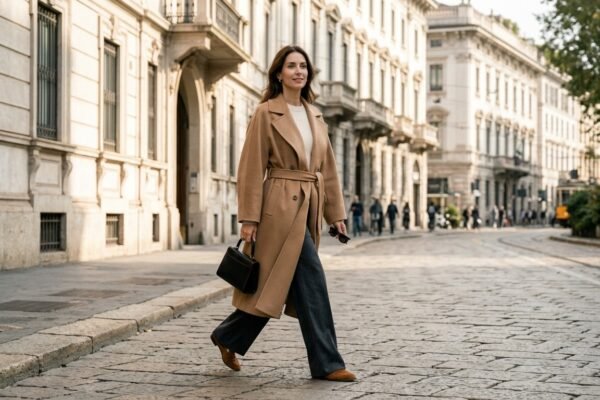
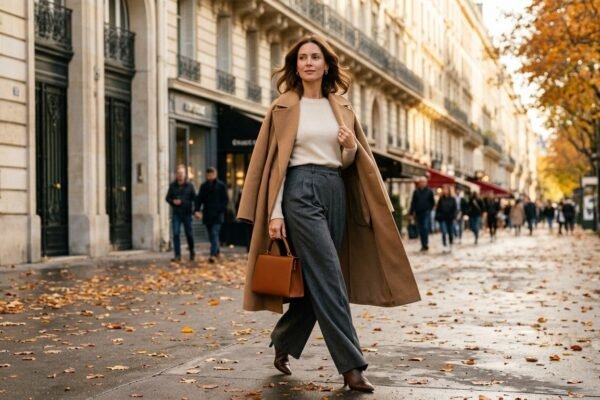
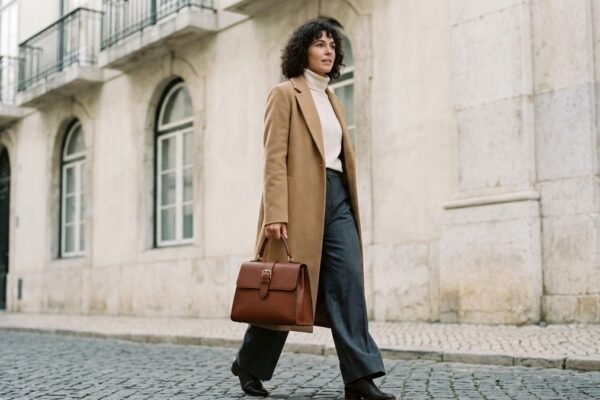
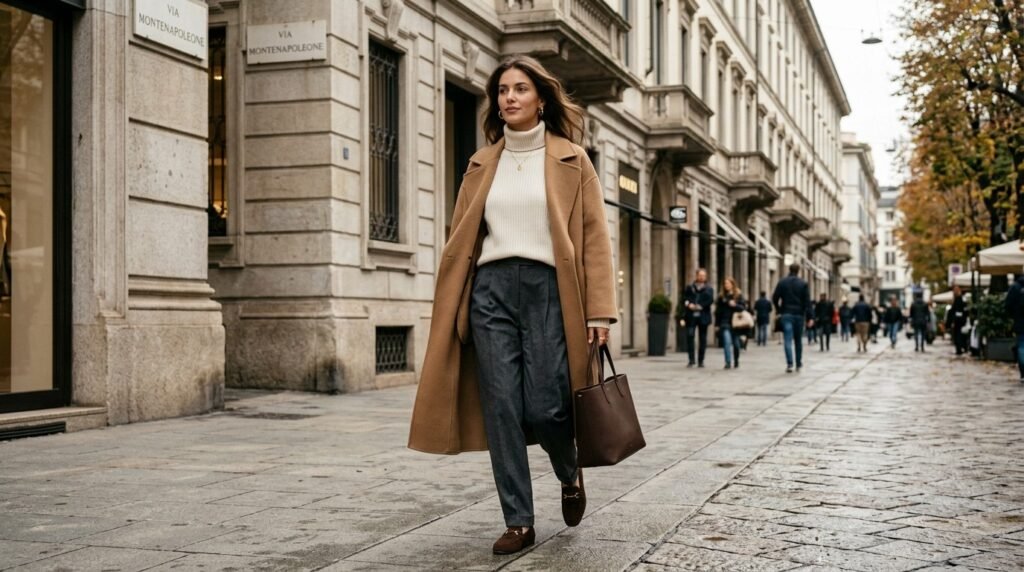
When a woman steps into a room wearing an unbranded camel hair coat cut from 450 GSM double-faced wool, paired with fluid charcoal trousers that fall with architectural weight across almond-toe suede loafers, her presence is felt before it is analyzed. There are no metallic logos flashing under gallery lights. There are no printed brand names proclaiming the garment’s retail price point. Instead, the outfit communicates authority through the whisper of combed fibers, the sharp pitch of a lapel, and the deliberate restraint of the silhouette. To build this caliber of wardrobe, one must look beyond aesthetics and understand the textile physics of luxury dressing.
The Anatomy of Quiet Luxury: Fabric Weights, Weaves, and Color Discipline
True elegance begins at the fiber level. When fast-fashion manufacturers attempt to replicate quiet luxury aesthetics, they rely on petroleum-derived acrylics, polyester filament threads, and lightweight cotton blends that pill, lose structural tension, and reflect harsh synthetic glare under sunlight. In contrast, authentic quiet luxury garments utilize natural noble fibers that interact with ambient light and movement in an entirely distinct manner.
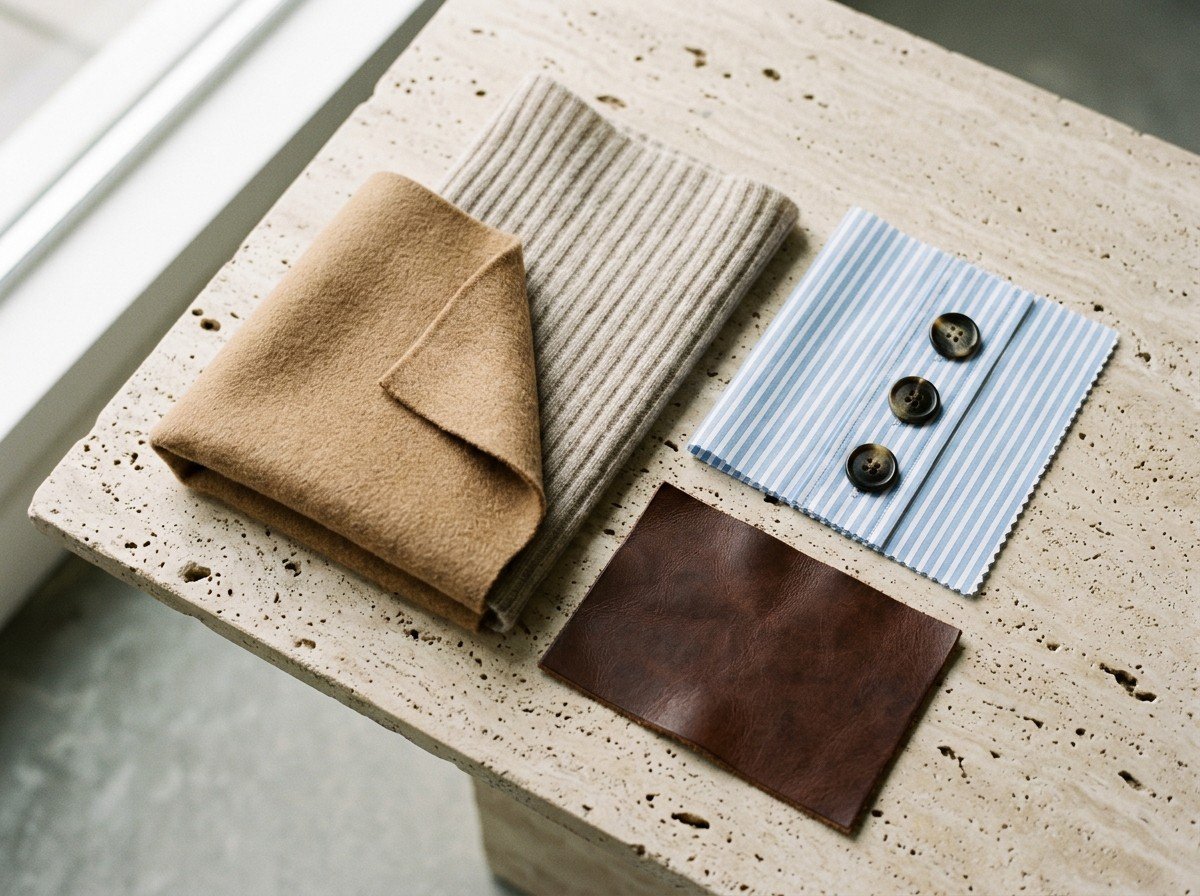
To curate outfits that project understated refinement, three core textile parameters must guide every acquisition:
- Grams Per Square Meter (GSM) and Yarn Ply: Fabric weight determines drape. An overcoat crafted from wool below 380 GSM will ripple and flutter in the wind, betraying inadequate substance. High-tier outerwear requires 400 to 520 GSM double-faced wool, which provides structural warmth without stiff internal canvassing. Similarly, knitwear should feature 2-ply or 3-ply twisted yarns (such as certified Responsible Wool Standard specifications) rather than single-ply strands that pill after three wears.
- Weave Architecture: Pay attention to the fabric surface. For suiting, grain de poudre (a crisp wool crepe with a granular texture) and cavalry twill offer sharp creases that resist wrinkling during full-day travel. For shirting, a 100/2 to 120/2 two-fold cotton poplin delivers a cool, paper-dry touch and a luminous matte finish.
- Color Harmony and The Neutral Discipline: Quiet luxury does not mean wearing pure stark black from head to toe. Rather, it operates on a tonal spectrum of organic earth pigments: raw ecru, warm oatmeal, camel, taupe, deep espresso, bitter chocolate, charcoal flannel, and midnight navy. These shades absorb daylight softly, creating depth through texture rather than chromatic vibration.
12 Architectural Quiet Luxury Outfit Formulas
Below are 12 foundational outfit formulas designed for deliberate repetition. Each look balances silhouette volume, fabric density, and subtle hardware discipline to create an effortless presence across professional, travel, and evening contexts.
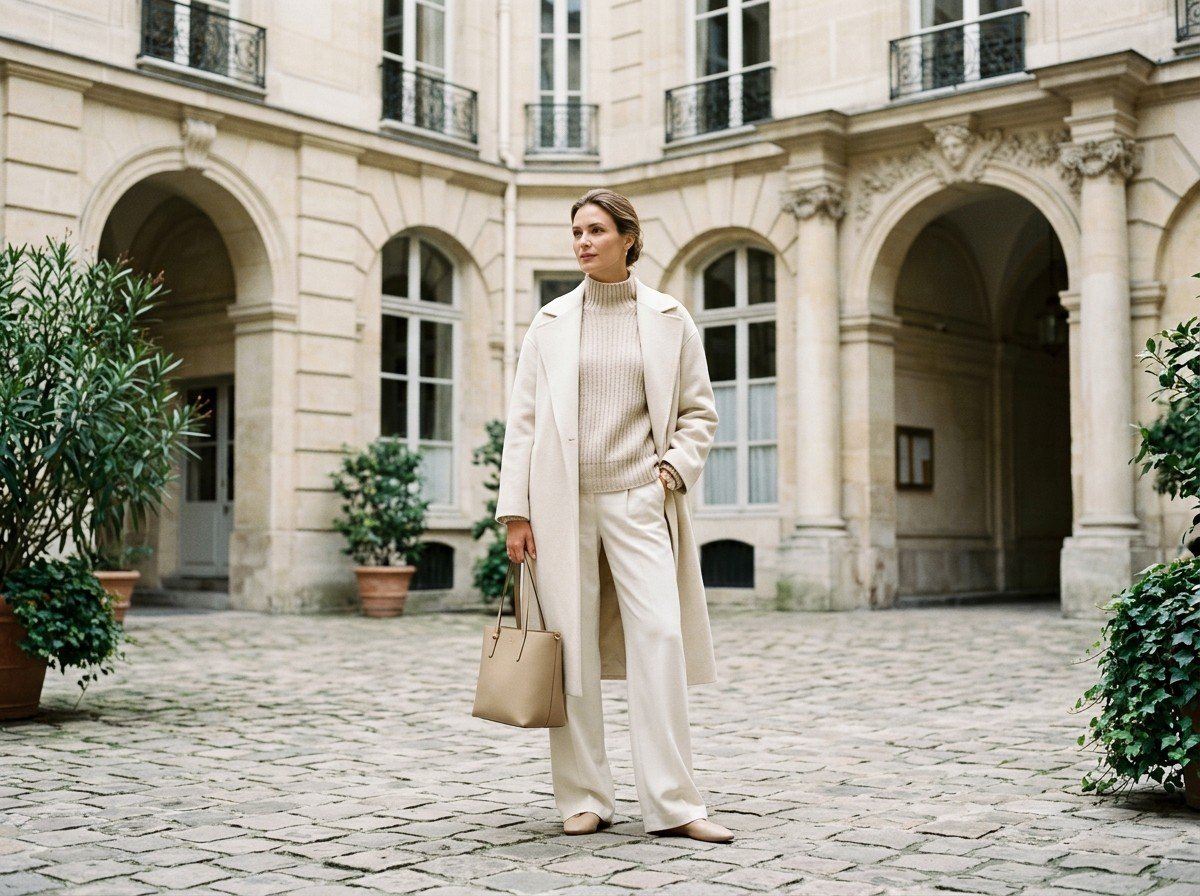
01. The Monochromatic Ivory Column
Daywear • Gallery Walk • Travel
A study in continuous tone. Dressing in unbroken shades of cream and oat elongates the body while spotlighting differences in tactile depth. The key to preventing monochromatic ivory from appearing flat is layering contrasting finishes: a matte double-faced wool coat against a ribbed cashmere mockneck and smooth fluid wool trousers.
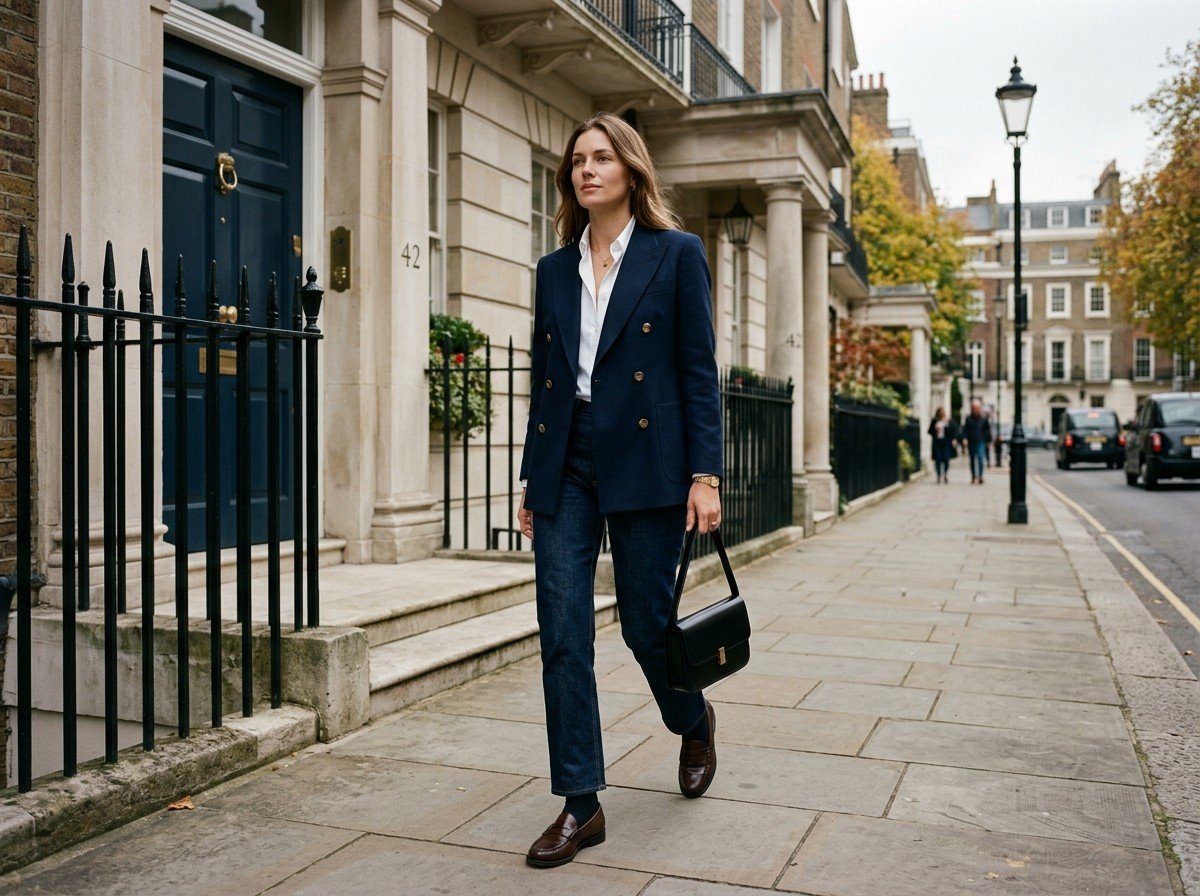
Executive • Private Dining
Navy suiting possesses a quiet aristocratic ease that pure black often lacks in daylight. Cut from dense grain de poudre wool, this double-breasted jacket features roped shoulders and horn buttons. Pair it with dark raw selvedge denim for a refined high-low counterpoint, or wear the matching tailored cigarette pant for executive presence. For further layering formulas under structured tailoring, explore our dedicated analysis on architectural layering formulas under blazers.
Rainy Transit • Autumn Street
A classic military trench remains the ultimate outer shield of quiet luxury when rendered in heavyweight 400 GSM water-repellent cotton gabardine. Rather than fastening the belt with the metal buckle, knot it casually behind the waist to create an architectural, flared A-line drape. Ground the look with a fine-gauge charcoal turtleneck knit and straight-leg wool trousers. For a full breakdown of classic Parisian outerwear staples, consult our Parisian capsule wardrobe blueprint.
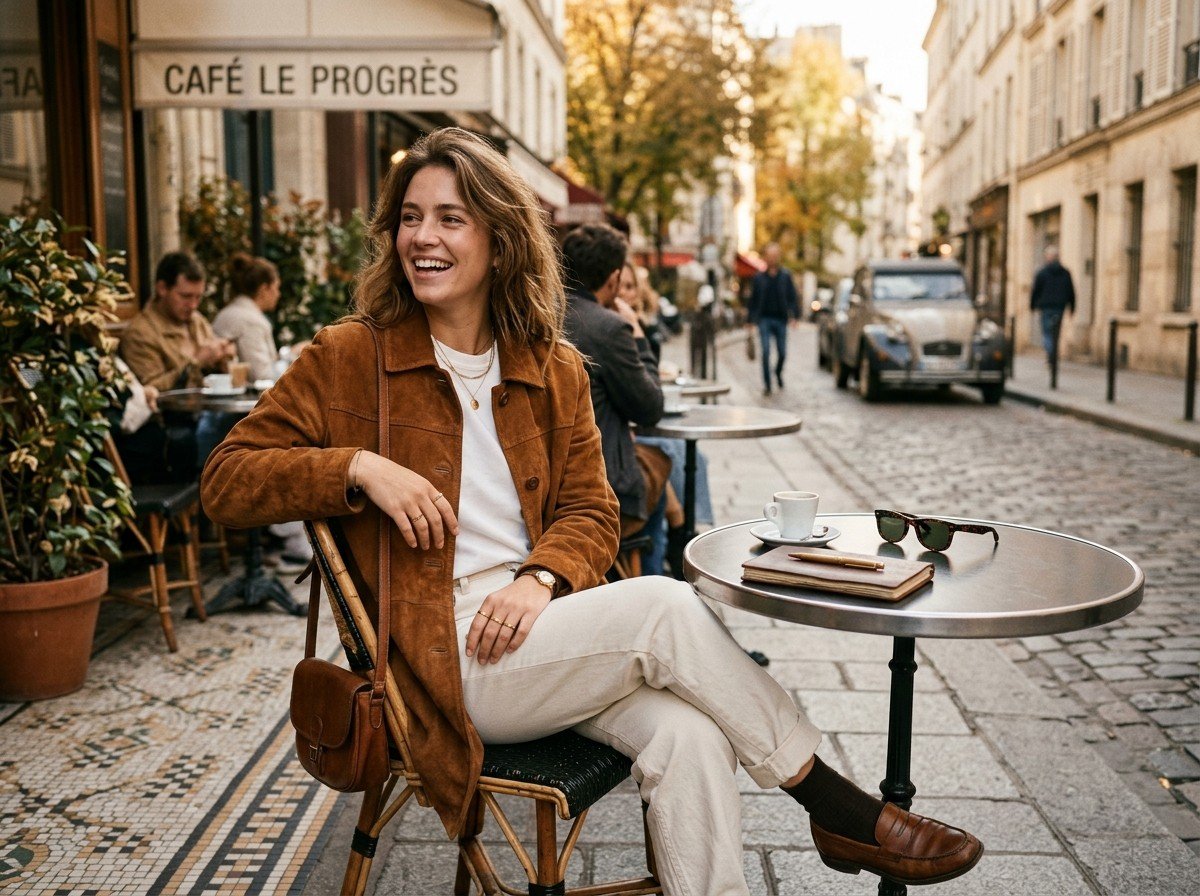
Weekend Morning • Cafe • Travel
Suede is the most sensual textile in the quiet luxury canon. An unlined car coat in rich tobacco or snuff goat suede absorbs ambient light, offering an earthy warmth that synthetic fabrics cannot emulate. Layer it over a heavyweight 240 GSM organic white cotton t-shirt and relaxed-fit ecru denim for an unhurried, off-duty elegance.
Evening • Autumn Dinner • Intimate Event
Brown is the defining hue of modern quiet luxury. When rendered in rich bitter chocolate and deep espresso, it delivers warmth without the stark severity of black. This formula juxtaposes a substantial 7-gauge ribbed cashmere crewneck sweater with a fluid, bias-cut silk cady slip skirt. The matte wool absorbs light while the silk gently reflects it, creating understated evening dimension.
Corporate Minimalist • Boardroom
Replace stiff traditional business shirts with a fine-gauge knit polo shirt crafted from 16-micron merino wool or silk-cashmere blend. Tucked into wide-leg, high-rise charcoal wool flannel trousers, this pairing achieves a sharp, intellectual poise. A slim, unbranded leather belt with a solid brushed brass buckle provides subtle structure at the waist.
Evening • Opera • Cocktail Hour
Echoing the clean archival lines of 1990s Calvin Klein and Jil Sander, this silhouette contrasts a fluid, bias-cut silk slip dress with an oversized, structured menswear blazer. The masculine tailoring frames the delicate silk, preventing the dress from feeling overly boudoir. Choose a heavy 25-momme sandwashed silk that drapes cleanly without static cling.
Country Weekend • Fireside • Travel
A heavyweight, untreated 5-gauge cable-knit sweater made from Scottish Shetland or Geelong wool carries an authentic country heritage. Pair this rich, dimensional knit with tailored gray flannel trousers rather than utilitarian leggings to elevate the aesthetic into quiet luxury territory.
Studio • Architect Office • Smart Casual
Nothing communicates crisp self-assurance like a menswear-proportioned blue-and-white butcher-stripe poplin shirt. Cut with generous armholes and a stiff spread collar, it looks best half-tucked into high-waisted, wide-leg wool trousers. Roll the cuffs twice to expose a discreet vintage gold watch or delicate cuff.
Urban Winter • Gallery Opening
Charcoal is the most intellectual neutral in European styling. Layering varying tones of slate, heather gray, and deep anthracite produces an understated, sculptural appearance. Pair a slim 2-ply cashmere crewneck with voluminous wide-leg flannel trousers and top with an unlined double-faced charcoal overcoat.
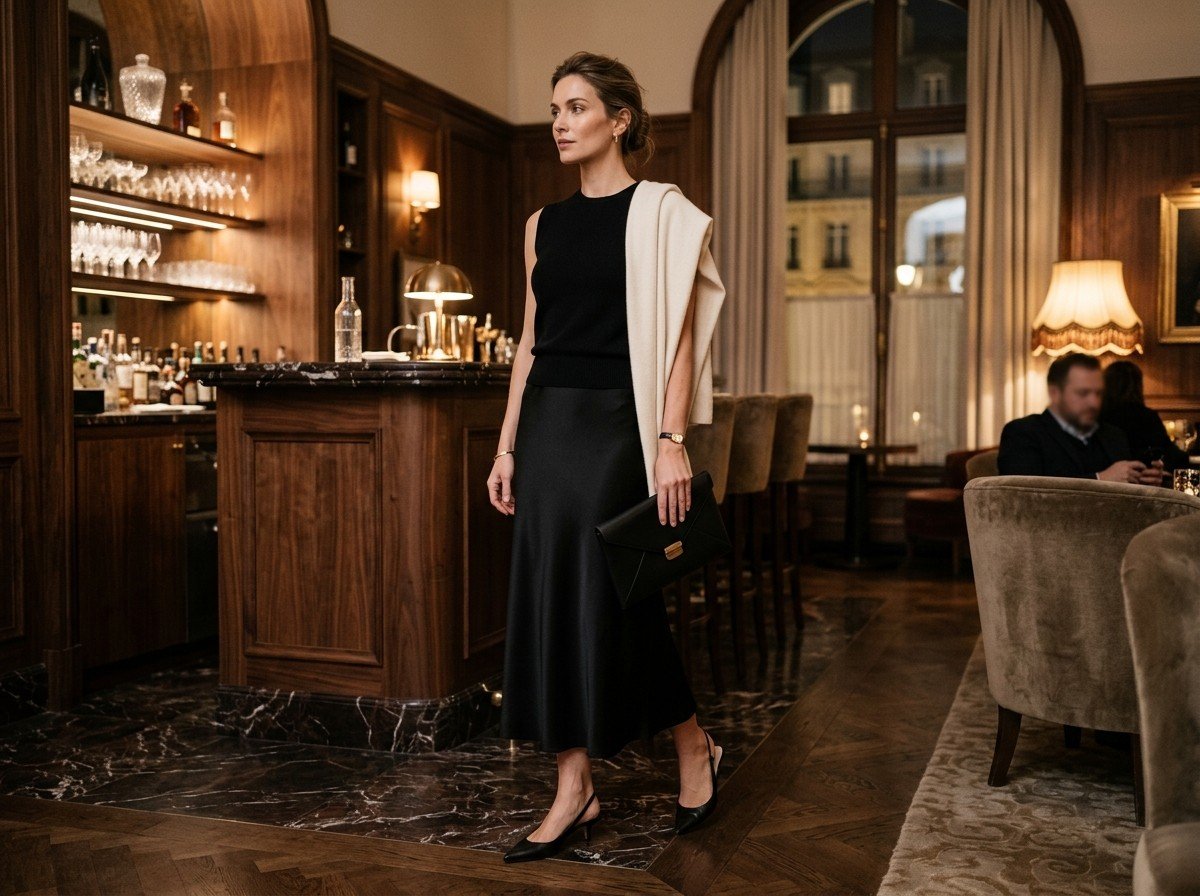
Black Tie Optional • Luxury Hotel Lounge • Gala
When black tie or high-end evening dining calls, resist the impulse toward sequins or synthetic lace. Quiet luxury eveningwear centers on fluid black silk cady, high-twist tuxedo wool trousers with satin side stripes, and a draped cream cashmere wrap. The silhouette references Yves Saint Laurent’s Le Smoking archives celebrated in the Costume Institute fashion archive.
Transitional Season • Resort • Coastal Travel
During warm transitional weeks, heavy wool overcoats feel premature. Master seasonal shifts by pairing an airy open-stitch knit crafted from a 70% linen, 30% mulberry silk blend with wide-leg Belgian linen trousers. The subtle sheen of the silk softens the crisp linen slub, providing breathability with tailored gravity.
The 5 Invariant Rules of Stealth Wealth Dressing
Quiet luxury is not a collection of individual purchases; it is an uncompromising standard of curation. Before acquiring any new piece or finalizing a daily outfit, apply these five foundational rules:
Rule 1: Absolute Logo Anonymity
If a handbag, shoe buckle, or coat collar requires a designer monogram or hardware logo to be identified, it does not belong in a quiet luxury wardrobe. True quality is recognized by knowledgeable peers through leather grain, saddle stitching, horn buttons, and fabric drape. For investment-grade handbags that avoid exterior branding, consult our curated edit of curation of unbranded leather bags.
Rule 2: The Architectural Third Piece
A shirt and trouser combination is functional dressing; adding an intentional third piece creates an architectural silhouette. This can take the form of an unlined double-faced wool coat, an oversized menswear blazer, a structured suede jacket, or a cashmere knit casually draped over the shoulders. The third piece establishes depth and deliberate framing.
Rule 3: Bespoke Proportional Alteration
Even high-ticket designer garments will appear cheap if sleeve lengths swallow the wrist or trouser hems pool messily across shoes. Budget an additional 15% of every clothing purchase for professional alterations. Ensure trouser hems break cleanly with a slight forward crease, blazer sleeves end exactly at the wrist bone to show 1.5 cm of shirt cuff, and coat shoulders sit flush without dimpling.
Rule 4: Full-Grain, Patinated Leather Only
Avoid “genuine leather” products coated in plastic polyurethane films that peel and crack. Invest strictly in full-grain French or Italian calfskin and reverse suede sourced under certified Leather Working Group environmental protocols. Quality leather softens and acquires an organic, patinated glow over years of handling.
Rule 5: Tonal Palette Restraint
Never combine more than two neutral base tones and one earthy accent in a single look. Grounding your wardrobe in a cohesive palette of black, charcoal, navy, cream, camel, and espresso allows every item to rotate across multiple formulas without chromatic discord. To discover independent designers championing this philosophy, see our dossier on 14 minimalist clothing brands.
The Cost-Per-Wear Investment Matrix
Quiet luxury is economically rational when analyzed across garment lifespans. Fast-fashion garments constructed from low-grade synthetic fibers typically withstand only 8 to 12 washes before losing shape, resulting in high cumulative replacement costs. In contrast, heirloom natural fibers withstand hundreds of wears over a decade.
| Wardrobe Item | Recommended Textile Spec | Average Investment | Estimated Wears (5 Yrs) | True Cost Per Wear |
|---|---|---|---|---|
| Double-Faced Wool Overcoat | 450 GSM virgin wool / cashmere blend | $1,200 | 350 wears | $3.42 / wear |
| Ribbed Cashmere Mockneck | 2-ply 12-gauge Mongolian cashmere | $450 | 220 wears | $2.04 / wear |
| Grain de Poudre Navy Blazer | 320 GSM high-twist wool with horn buttons | $750 | 300 wears | $2.50 / wear |
| Tailored Wool Flannel Trousers | High-twist double-pleat English flannel | $380 | 260 wears | $1.46 / wear |
| Full-Grain Leather Work Tote | Vegetable-tanned unbranded calfskin | $980 | 650 wears | $1.50 / wear |
Robert Leatherman on Wardrobe Restraint
“The most common mistake women make when attempting to adopt quiet luxury is buying too many pieces at once. You do not need a twenty-coat wardrobe. You need one masterfully tailored coat that drapes like an architectural column, two pairs of impeccably cut wool trousers, and three substantial cashmere knits that hold their shape. When your foundational garments possess authentic fabric integrity, getting dressed in the morning is no longer an emotional negotiation. It becomes a calm, repeatable ritual of self-assurance.”
Robert Leatherman
Frequently Asked Questions
Can quiet luxury outfits be built on a realistic budget?
Yes. Quiet luxury is dictated by fabric composition and tailoring rather than brand prestige. Focus on secondhand luxury platforms (such as The RealReal or Vestiaire Collective) for vintage double-faced wool coats and silk scarves. On the high street, scrutinize material labels at stores like COS and Massimo Dutti, purchasing exclusively 100% natural fibers (wool, cotton, linen, silk) while avoiding synthetic blends. Allocate twenty dollars at a local tailor to hem trousers and adjust sleeve lengths to achieve a custom silhouette.
What footwear best complements quiet luxury tailoring?
Unadorned footwear crafted from full-grain calfskin or rich suede. Key staples include almond-toe penny loafers in chocolate suede, leather glove flats in ecru or black, minimalist low-profile leather sneakers with zero logos, and sleek 45mm kitten heel slingbacks for eveningwear. Avoid thick rubber platform soles or conspicuous metallic buckles.
How do I care for noble fibers to ensure they last for years?
Avoid frequent dry cleaning, as harsh chemical solvents strip natural lanolin from wool and cashmere fibers. Instead, air out knitwear overnight after wearing, spot-clean small spills with distilled water, and use a natural bristle garment brush to remove surface dust. Store seasonal knits in breathable linen bags with cedar blocks to prevent moth damage, and de-pill with a manual cashmere comb rather than electric rotary shavers.
What jewelry pairs best with quiet luxury silhouettes?
Discreet, high-integrity metals. Opt for solid 14k or 18k brushed gold bangles, delicate cable chain necklaces, vintage tank watches with black alligator straps, and small bezel-set diamond or pearl studs. The jewelry should function as a subtle point of light rather than a dominating statement piece.