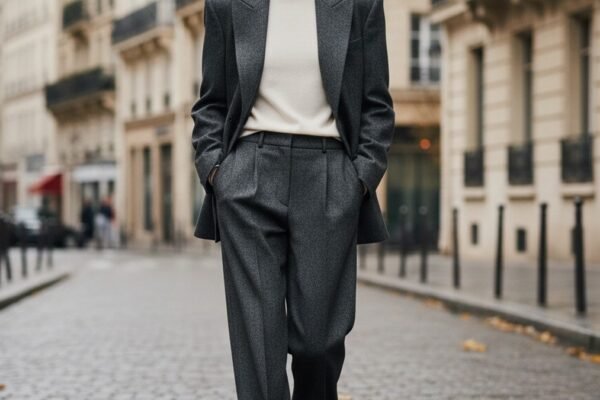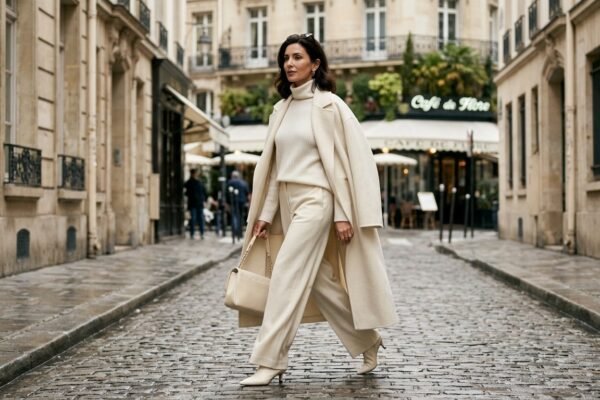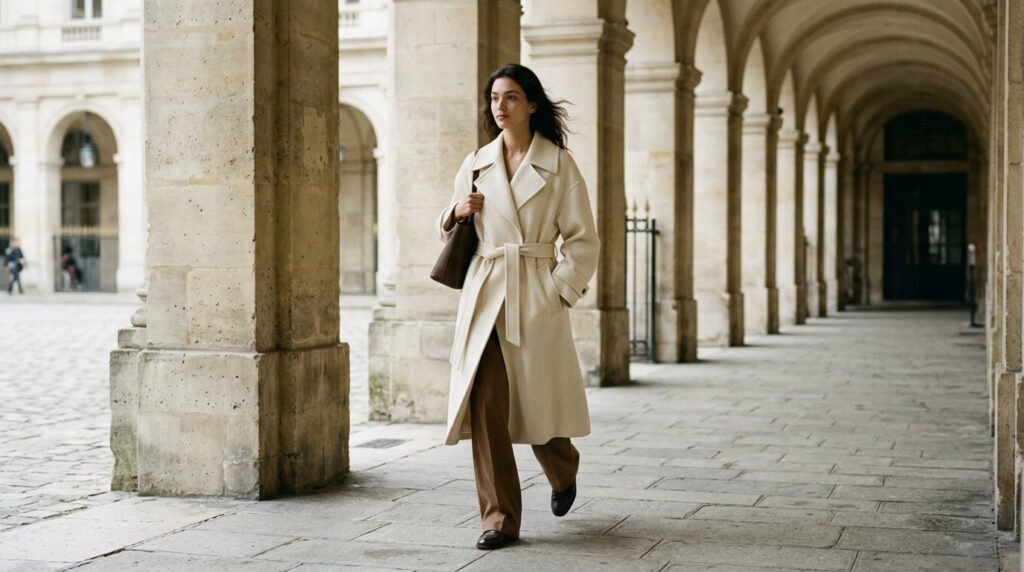
True minimalism in modern dressing is not a passive absence of color or decoration. It is an architectural discipline of proportion, tactile textile integrity, and uncompromising construction that stands resolute against seasonal trend churn.
The premier minimalist clothing brands in 2026 span three distinct tiers of construction and price. High-fashion architectural luxury is anchored by The Row, Toteme, Lemaire, and Jil Sander, renowned for unlined double-faced cashmere, garment-dyed poplin, and razor-sharp pattern geometry. Contemporary quiet luxury pioneers include Kallmeyer, Khaite, Another Tomorrow, Róhe, and Filippa K, offering investment-grade tailoring and certified ethical fibers. For accessible daily staples, COS Atelier, Arket, Massimo Dutti Studio, and Toast deliver structured organic cottons and traceable wool knits under $300.
Key Investment Takeaways
Prioritize Fabric GSM and Fiber Purity Over Brand Hype
Evaluate tailoring by textile heft and composition. Seek 100% virgin wool gabardine above 340 GSM for outerwear and long-staple Egyptian cotton poplin above 120 GSM for shirting to ensure crisp drape without synthetic sag.
Scrutinize Internal Construction and Seam Allowances
The mark of luxury minimalism lies on the inside. French seams, bound interior bias tape, half-canvas chest pieces, and generous 2-inch trouser hems denote garments engineered for decades of tailoring adjustments.
Adopt a High-Low Modular Wardrobe Matrix
Invest maximum capital in structural outerwear and bespoke-grade trousers from Tier 1 and Tier 2 houses. Pair them with precision base layers from accessible Nordic brands for optimal cost-per-wear longevity.
The Anatomy of Modern Minimalist Dressing
For decades, mass-market retail reduced minimalist style to sterile black T-shirts and polyester suiting. Modern fashion directors view minimalism through a vastly different lens. It explores sculpture, tactile tension, and intentional silhouette. When color is quieted to a palette of chalk, espresso, charcoal, and warm camel, every raw material defect, sloppy seam, and awkward shoulder drop becomes instantly visible.
Discerning collectors examine how garments interact with gravity and movement. A tailored wool trouser must hold a vertical crease while pooling gracefully over a leather shoe. A cashmere knit must balance thermal density with lightness. As documented by historic curators at The Costume Institute at The Met, the history of 20th and 21st-century dress reveals that garments stripped of decorative ornament require the most exacting engineering of all.
Below is our definitive editorial analysis of the 14 minimalist clothing brands defining contemporary wardrobes, categorized by their aesthetic philosophy, construction benchmarks, and price reality.
Brand & Origin |
Aesthetic Core |
Signature Silhouette |
Best Investment Piece |
Price Tier |
|---|---|---|---|---|
| The Row (USA/FR) | Pure architectural silence | Columnar, elongated drape | Double-faced cashmere coat | Ultra-Luxury ($1,500+) |
| Toteme (Sweden) | Scandinavian geometric pragmatism | Sculptural outerwear & denim | Signature drape wool scarf jacket | Luxury ($400 – $1,400) |
| Lemaire (France) | Modular Parisian utility | Voluminous, fluid layering | Garment-dyed poplin shirt & croissant bag | Luxury ($500 – $1,600) |
| Jil Sander (Italy/DE) | Sharp modernist purity | Razor-sharp tailoring & boxy wool | Structured virgin wool blazer | Ultra-Luxury ($1,200+) |
| Kallmeyer (USA) | Sensual New York tailoring | High-waist wide trousers | The Pleated Wool Wide-Leg Trouser | Contemporary ($450 – $950) |
| Khaite (USA) | Structural balance & sensual heft | Architectural knitwear & rigid denim | Heavy gauge ribbed cashmere cardigan | Luxury ($700 – $2,200) |
| Another Tomorrow (USA) | Traceable B-Corp tailoring | Bespoke-grade double-breasted suits | FSC-certified viscose tailored jacket | Contemporary ($550 – $1,100) |
| Róhe (Netherlands) | Textile-first Amsterdam modernism | Textured bouclé & masculine coats | Italian wool oversized coat | Contemporary ($350 – $850) |
| Filippa K (Sweden) | Circular Scandinavian simplicity | Clean lines, fluid silk separates | Recycled wool car coat | Contemporary ($300 – $750) |
| The Curated (Norway/UK) | Direct-to-consumer fine fibers | Belted wool & cashmere wraps | The Classic double-faced cashmere coat | Accessible Luxury ($350 – $650) |
| COS Atelier (UK) | High-concept architectural lines | Structured poplin & sculpted wool | Tailored wool twill wide-leg trousers | Accessible ($120 – $350) |
| Arket (Sweden) | Nordic utility & GSM transparency | Weighted jersey, clean denim, merino | 220 GSM heavyweight cotton crewneck | Accessible ($45 – $220) |
| Massimo Dutti Studio (Spain) | Mediterranean tailored sophistication | Sharp lapels & fluid viscose dresses | 100% Italian wool tailored suit | Accessible ($140 – $380) |
| Toast (UK) | Tactile artisan workwear | Easy chore jackets, corduroy, raw denim | Garment-dyed linen painter shirt | Accessible ($160 – $390) |
Tier 1: Architectural Luxury and High-Fashion Minimalism
1. The Row: The Absolute Benchmark of Tactile Silence
Founded in 2006 by Ashley Olsen and Mary-Kate Olsen, The Row remains the indisputable high temple of quiet luxury. The house does not print logos, stage theatrical runway spectacles, or court algorithmic attention. Instead, its power resides in cut, balance, and textile selection that borders on obsessive.
A coat from The Row is unlined not to save manufacturing cost, but because the internal double-faced cashmere is hand-split, rolled, and invisibly slip-stitched along every seam. This construction allows the garment to collapse against the shoulders with zero bulk. Pair one of their unstructured coats with an unbranded, structured companion piece from our minimalist leather bag investment guide to maintain complete aesthetic harmony.
What to Buy: The Gala pant in heavy virgin wool cady, the Margaux tote, and unlined double-faced cashmere outerwear. These pieces maintain their structural drape over a decade of continuous wear.
What to Skip: The basic supima cotton t-shirts. While beautifully cut, $450 cotton jersey exhibits identical wear patterns and washing realities to premium Japanese cotton jersey priced under $90.
2. Toteme: Swedish Precision and Daily Architectural Uniforms
Elin Kling and Karl Lindman launched Toteme in Stockholm in 2014 with a clear mandate: to design a curated, repeatable uniform for the modern woman. Where other labels produce sprawling collections, Toteme sharpens a core universe of geometric lines, twisted denim seams, and sculpted outerwear.
The brand understands how climate demands function without sacrificing form. Their scarf jacket, cut from heavy non-mulesed wool with blanket stitching, balances warmth with distinctive neckline geometry. The tailoring carries wide notched lapels and elongated sleeve cuffs that drape naturally over knitwear.
What to Buy: The draped scarf jacket, twisted-seam rigid denim in washed black, and silk monogram pajamas for evening layering.
What to Skip: Lightweight viscose knit tops, which tend to lose their memory at the elbows after repeated wear compared to their wool alternatives.
3. Lemaire: Fluid Parisian Utilitarianism
Christophe Lemaire and Sarah-Linh Tran have cultivated one of the most distinctive design languages in Paris. Lemaire garments do not feel rigid or stiff; they inhabit the wearer with fluid modularity. The palette draws from wet pavement, lichen, slate, tobacco, and espresso.
Lemaire treats shirting and outerwear as architectural envelopes. Their signature dry silk, a tactile blend of silk and polyamide, handles humid summers and autumn rain with equal grace. Garment-dyed cotton poplin creates soft seam puckering that lends shirts an intimate, lived-in patina from the first wearing.
What to Buy: High-collar dry silk shirting, twisted belted chinos, and the iconic Croissant bag in garment-treated Nappa leather.
What to Skip: The fine-gauge wool knit cardigans, which require intense hand-laundering care to prevent fiber shrinkage compared to their structured cotton poplin separates.
4. Jil Sander: The Foundation of Razor-Sharp Modernism
Under the creative direction of Lucie and Luke Meier, Jil Sander honors its founder’s 1990s legacy while softening the aesthetic with rich texture and artisanal craft. The label avoids extraneous seams, pocket flaps, and visible buttons in favor of immaculate proportion play.
The tailoring uses high-twist Italian wool gabardine that sheds wrinkles immediately. Shoulders are constructed with light internal canvassing that creates a clean line without 1980s stiffness. Every hem is broad and hand-finished.
What to Buy: Structured double-breasted suiting, boxy poplin shirts with sculpted collars, and minimalist Chelsea boots with thick vulcanized soles.
What to Skip: Printed silk accessories, which deviate from the brand’s core strengths in monochrome tailoring.
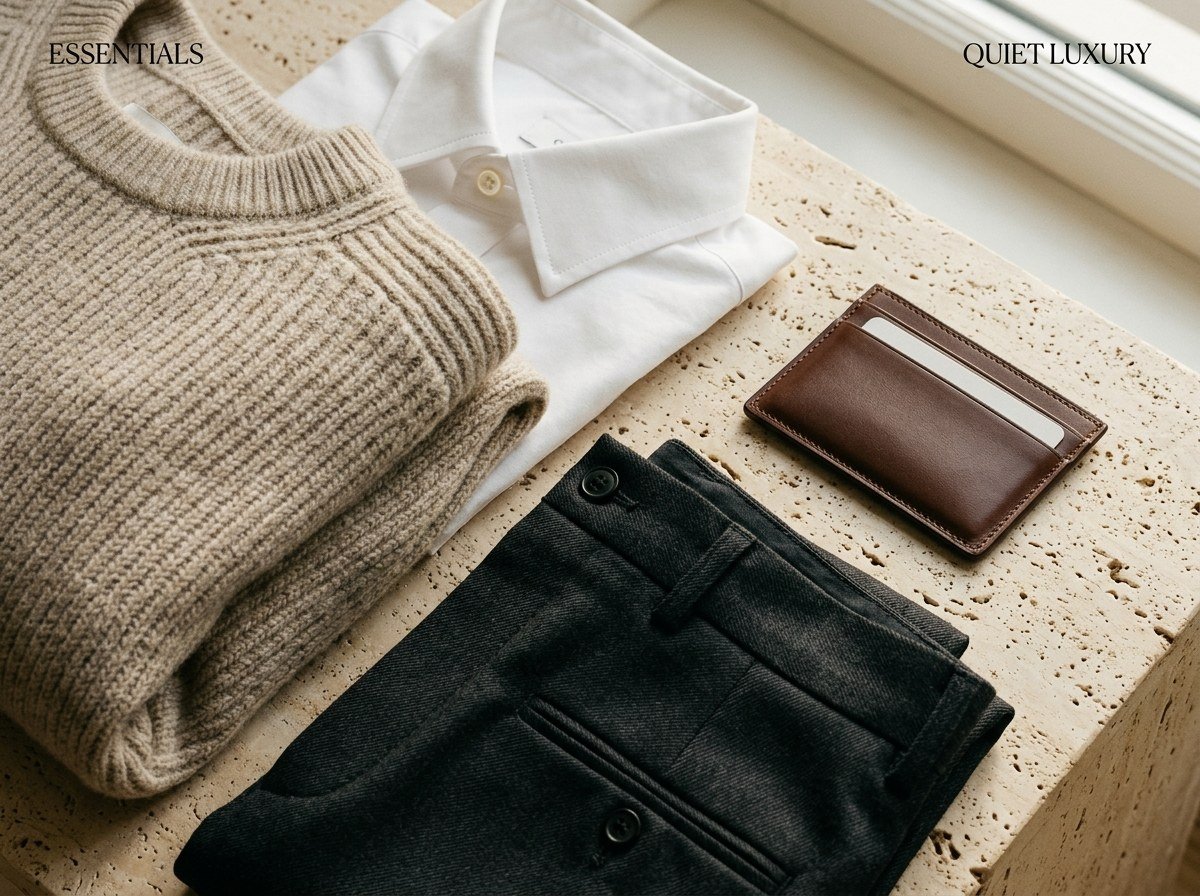
Textile integrity: Heavyweight oatmeal cashmere, crisp 120 GSM cotton poplin, and tailored virgin wool suiting on warm travertine.
Tier 2: Contemporary Quiet Luxury Pioneers
5. Kallmeyer: Conscious New York Tailoring for Real Life
Daniella Kallmeyer founded her namesake label in the Lower East Side of Manhattan, driven by a frustration with restrictive women’s suiting. Kallmeyer designs tailored garments that honor female movement. The trousers feature deep pleats, flexible internal waistbands, and pockets deep enough to carry a phone and cardholder without distorting the side silhouette.
Fabrication is sourced from multi-generational Italian and British mills. Kallmeyer cuts wools that hold their crispness through long studio days and evening dinners. The brand represents modern American sportswear at its most refined.
What to Buy: The High-Waisted Wide-Leg Pleated Trouser in wool suiting and the unstructured oversized blazer in camel hopsack.
What to Skip: Seasonal satin slip dresses that do not deliver the same transformative tailoring mastery as their suiting separates.
6. Khaite: Structural Knitwear and Sensual Proportions
Catherine Holstein launched Khaite in 2016 to reimagine classic American sportswear through a sensual, architectural lens. Khaite garments are distinguished by their structural density. While other brands cut thin knitwear that clings, Khaite knits heavy gauge cashmere that sculpts the torso and flares gently at the waist.
Their denim is woven on vintage shuttle looms in Japan, offering rigid 100% cotton selvage that molds to the body over time. Khaite understands that minimalism does not mean flat garments; it thrives on dimensional texture.
What to Buy: The Scarlet cardigan, the Danielle rigid high-rise jean, and structured leather ankle boots with sculpted heels.
What to Skip: Lightweight cotton jersey basic tees, where the brand markup exceeds the physical textile value.
7. Another Tomorrow: Traceable Ethics and Savile Row Rigor
Another Tomorrow proves that ethical production does not require rustic linen sacks or compromise on design rigor. The certified B-Corp uses custom-milled fabrics with verified supply chain transparency, adhering to Textile Exchange organic fiber standards across all manufacturing partners.
Their tailoring utilizes ethical merino wool from animal-welfare certified farms in Tasmania, spun and woven in green-energy mills in Biella, Italy. The jackets feature bespoke-grade chest canvas construction and functional horn button cuffs.
What to Buy: The Classic Double-Breasted Jacket in ethically sourced wool and FSC-certified custom viscose shirting.
What to Skip: The swimwear capsule, which diverts focus from their world-class tailoring collection.
8. Róhe: Dutch Materiality and Tactile Volume
Based in Amsterdam, Róhe approaches clothing design from a fabric-first philosophy. Founders Maickel and Marieke Weyers work directly with family-owned Italian fabric mills before sketching silhouettes. If the yarn lacks character, the garment is never produced.
Róhe stands out for its tactile outerwear. Thick bouclé wools, brushed alpaca textures, and substantial trench fabrics dominate their collections. The aesthetic balances Dutch utilitarian clarity with Italian fabric indulgence.
What to Buy: Brushed alpaca oversized overcoats, textured wool sweaters, and architectural belted trenches.
What to Skip: Poly-blend printed tops from transitional drops that fall outside their core wool and leather foundations.
9. Filippa K: Circular Scandinavian Minimalism
Founded in 1993, Filippa K laid the foundational stones of Scandinavian minimalism long before the phrase trended on social platforms. The Stockholm label designs garments with circularity in mind, using recycled cashmere, mulesing-free wool, and mono-materials that can be recycled at the end of their lifecycle.
The cuts are clean, serene, and understated. Softly tailored single-breasted coats, fluid wool culottes, and clean-edge fine-knit tops form the core of the brand. It is an ideal label for building an everyday capsule wardrobe that transitions effortlessly from work to weekend.
What to Buy: Double-faced recycled wool car coats, fluid silk button-down shirts, and relaxed merino turtlenecks.
What to Skip: Ultra-skinny stretch denim lines that clash with modern relaxed silhouette proportions.
10. The Curated: Direct-to-Consumer Mongolian Cashmere
The Curated, founded by Nicola bathie McLaughlin in Norway, disrupted the luxury outerwear market by offering pure double-faced Mongolian cashmere and Merino wool coats directly to customers. By eliminating traditional retail distributor margins, the brand delivers $1,500-grade outerwear for under $650.
Their coats are unlined, hand-sewn, and exceptionally warm despite their featherweight feel. The Classic coat presents wide lapels, deep patch pockets, and a clean sash belt that ties comfortably around the waist without bunching.
What to Buy: The Classic coat in camel or chocolate double-faced cashmere, and the Boyfriend Blazer in tailored wool.
What to Skip: Footwear drops, where sizing consistency can vary across production runs.
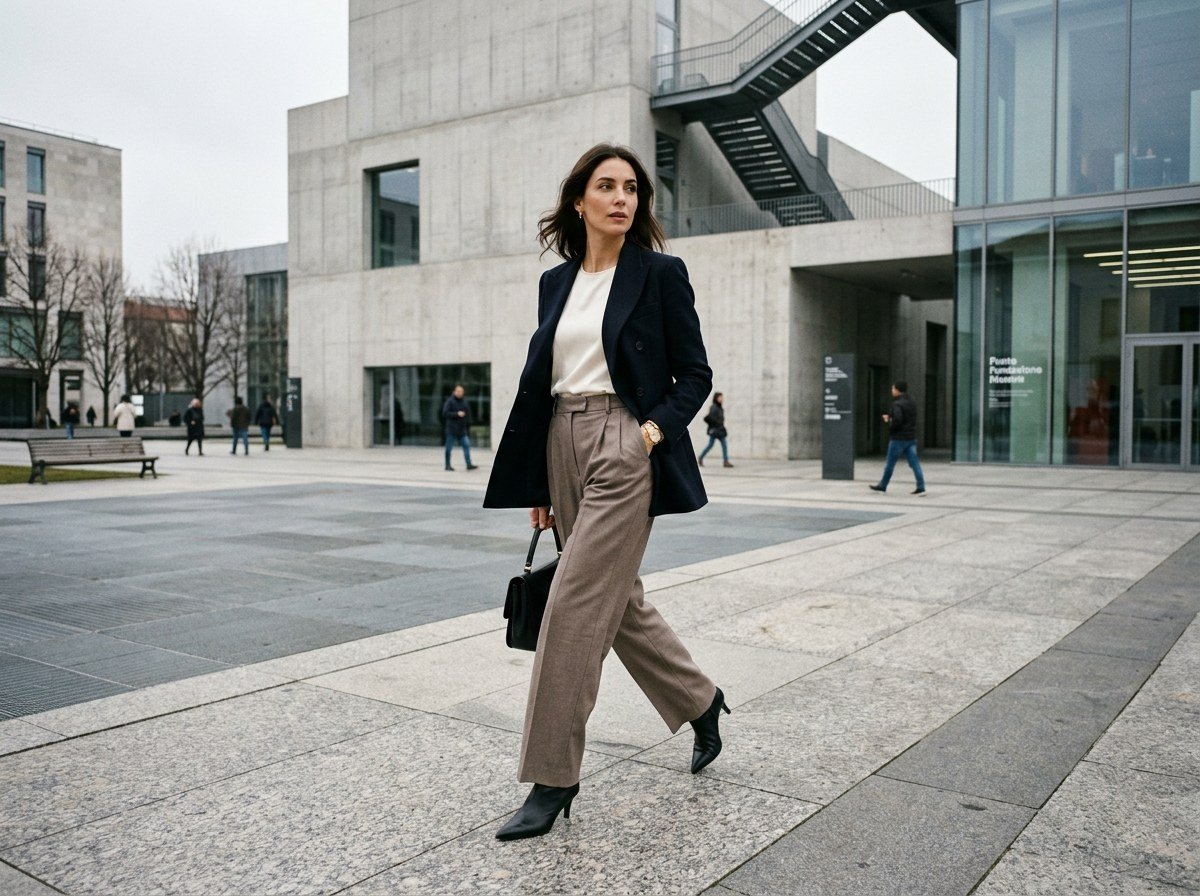
Effortless poise: Navy double-breasted wool blazer paired with pleated taupe trousers and pointed leather boots in Milan.
Tier 3: Elevated High-Street and Accessible Staples
11. COS and COS Atelier: High-Street Architectural Experiments
Launched by H&M Group in London in 2007, COS (Collection of Style) revolutionized accessible fashion by bringing modernist Scandinavian design to the high street. In recent seasons, the introduction of the premium COS Atelier line has elevated their design language to rival contemporary labels costing four times as much.
COS excels at sculptural cotton shirting, crisp wide-leg trousers, and boxy outerwear. They frequently use heavy 100% organic cotton twill that maintains its form throughout long wear days. Fabric designers utilize guidelines from the Council of Fashion Designers of America to balance material circularity with structured drape.
What to Buy: The wide-leg tailored wool trousers, oversized organic cotton poplin shirts, and the COS Atelier tailored blazers.
What to Skip: Lightweight poly-viscose blend suiting from standard seasonal collections, which lacks the breathability and longevity of their pure wool garments.
12. Arket: Utilitarian Transparency and GSM-Graded Basics
Arket, another Stockholm-based gem in the Nordic design ecosystem, functions like a modern market for sustainable daily goods. What sets Arket apart from every high-street competitor is its commitment to technical transparency. Every jersey product lists its exact grams per square meter (GSM) weight, allowing shoppers to choose between a light 150 GSM tee or a sturdy 220 GSM heavyweight crewneck.
The brand specializes in reliable uniform pieces: heavyweight cotton marinière tops, RWS-certified merino wool crewnecks, and clean Japanese selvage denim.
What to Buy: Heavyweight 220 GSM cotton t-shirts, RWS-certified merino crewnecks, and tailored trench coats in water-resistant organic cotton twill.
What to Skip: Synthetic blend seasonal outerwear that does not feature technical waterproofing seals.
13. Massimo Dutti Studio: Mediterranean Tailoring with Italian Fabrics
While main-line Massimo Dutti offers polished corporate wear, their curated Studio Collection represents an intentional shift toward high-end minimalism. Drawing from Mediterranean sartorial traditions, the pieces feature sharp peak lapels, fluid viscose fabrics, and structured Italian wools.
The cuts are sharper and more formal than Scandinavian brands, making Massimo Dutti Studio a premier destination for business-formal capsule wardrobes on an accessible budget.
What to Buy: 100% Italian virgin wool tailored suits, leather trench coats, and silk-blend slip skirts.
What to Skip: Acrylic-heavy knitwear pieces that pill quickly along underarm friction points.
14. Toast: Tactile British Workwear and Artisanal Textures
Founded in Wales, Toast approaches minimalism through the lens of traditional craftsmanship and tactile utility. Toast garments are not slick or glossy. They celebrate the slub of raw linen, the softness of garment-washed needlecord, and the honest drape of British wool.
The silhouettes are generous and functional, featuring chore coats, deep patch pockets, and dropped shoulders. Toast is the ideal brand for readers who appreciate an earthy, textural minimalism that feels rooted in artisan culture.
What to Buy: Garment-dyed linen smock shirts, heavy needlecord trousers, and unlined wool chore jackets.
What to Skip: Formal tailored pieces, which do not align with the brand’s relaxed, workwear-focused identity.
- The Silhouette: Architectural balance pairing an oversized masculine outer jacket with a fluid, body-skimming base layer and wide-leg trousers.
- Key Investment: Unlined double-faced cashmere or virgin wool coat in camel, charcoal, or dark espresso.
- Editor’s Tip: Always ground relaxed tailoring with structured leather footwear. A sharp pointed-toe boot or clean loafer balances relaxed trouser volume.
How to Curate a Minimalist Wardrobe with Intention
Transitioning to a minimalist wardrobe does not require throwing away your entire closet overnight. It requires adopting a disciplined curation matrix before adding any new garment. Before buying from any of the brands listed above, apply this four-question editorial test:
- The Fabric Test: Is this garment constructed from at least 90% natural, biodegradable fibers (wool, silk, cotton, linen, cashmere)? Synthetic linings and poly-elastane blends pill quickly, trap odor, and collapse under repeated pressing.
- The 3-Outfit Test: Can this piece effortlessly pair with at least three garments already hanging in your closet? If an item requires buying two new companion pieces to function, it is an impulse acquisition rather than a wardrobe foundation.
- The Tailoring Test: Does the shoulder seam sit cleanly at your natural acromion bone, or is it intentionally dropped by the designer? Check the internal hems: is there at least 1.5 inches of extra fabric allowance inside the cuffs to permit personal alterations?
- The Cost-Per-Wear Horizon: If you divide the retail purchase price by an estimated 60 wear days over three years, does the resulting cost-per-wear beat buying a $90 fast-fashion alternative that falls apart after three laundry cycles? Quality garments always win this financial equation over time.
Frequently Asked Questions on Minimalist Fashion
What defines a minimalist clothing brand?
A true minimalist clothing brand is characterized by clean lines, restrained color palettes, exceptional natural fabric quality, and timeless architectural silhouettes. These brands avoid loud logos, decorative distress marks, and fast-fashion trend cycles, focusing instead on precision tailoring, durable internal construction, and garments that integrate naturally into modular capsule wardrobes.
What are the best affordable minimalist clothing brands?
For shoppers seeking high-level design under $300, COS, Arket, Massimo Dutti Studio, and The Curated offer the highest price-to-quality ratio. Arket provides transparent GSM-graded organic cotton basics, COS delivers runway-grade architectural shirting and wool trousers, and The Curated offers pure Mongolian double-faced cashmere outerwear without luxury middleman markups.
Is quiet luxury the same as minimalist fashion?
While quiet luxury and minimalist fashion share a distaste for loud logos and flashy hardware, quiet luxury focuses heavily on ultra-exclusive, opulent fabrications such as vicuña, baby cashmere, and bespoke leatherwork (typified by Loro Piana and Brunello Cucinelli). Minimalist fashion is an aesthetic and design discipline rooted in silhouette, proportion, and utility, accessible across both luxury and high-street tiers.
How do I start building a minimalist wardrobe on a budget?
Begin by auditing what you wear most often and identifying your core color foundation (such as black, ivory, and taupe). Invest in three high-utility anchor pieces first: a perfectly tailored pair of pleated wool trousers, an unlined structured blazer, and a crisp heavyweight cotton shirt. Source foundation tees and knits from Arket or COS, and allocate the remainder of your budget to vintage or resale high-end outerwear from brands like Toteme and Lemaire.
What fabrics should I look for in minimalist garments?
Prioritize high-density natural fibers that maintain their structural memory: 100% virgin wool gabardine, double-faced wool, cashmere, long-staple cotton poplin (120 GSM or higher), raw unwashed denim, and heavy mulberry silk. Avoid polyester linings and high-percentage elastane blends, which cause garments to sag, stretch out, and pill after minimal wear.