How do you style wide-leg trousers without looking overwhelmed?
Styling wide-leg trousers successfully requires mastering the 1/3 to 2/3 golden proportion rule. Because the trouser introduces substantial horizontal volume through the lower body, the torso must establish an unmistakable focal anchor. Pair high-rise trousers (sitting directly at or above the natural navel) with close-fitting base layers (such as fine-gauge ribbed cashmere knits, French-tucked poplin shirting, or fitted crewneck tees), or crop outer layers precisely at the waistband bone. Footwear must balance this volume: choose elongated almond-toe penny loafers, pointed-toe boots, or low-profile leather sneakers where the hem breaks with a clean half-break, hovering exactly 1 cm above the ground.
Key Tailoring Takeaways
- The 1/3 to 2/3 Vertical Ratio: Keep the upper torso compact (1/3) and the leg line extended (2/3) to create continuous vertical elongation.
- Fabric Weight Dictates Fluidity: Avoid stiff, lightweight synthetics that bunch awkwardly; prioritize 320 to 420 GSM wool flannel, wool twill, or heavy Belgian linen with natural drape.
- The Half-Break Rule: Hem wide-leg trousers to float exactly 1 centimeter above the floor when wearing your target shoe height, preventing fabric puddling and street drag.
- Pleat Discipline: Forward-facing single or double pleats add necessary architectural ease across the hips while maintaining a razor-sharp pressed front crease down the leg.
- Pointed and Elongated Toes: Round, stubby shoe toes get swallowed by wide hems; select pointed-toe boots, chisel-toe loafers, or slim retro sneakers to anchor the base.
Wide-leg trousers represent the defining silhouette of modern luxury tailoring. Moving decisively away from the restrictive confines of skinny trousers and stiff corporate cigarette cuts, the contemporary wide-leg silhouette channels the fluid nonchalance of 1930s Oxford bags and Katharine Hepburn’s pioneering menswear wardrobe. Yet for many women, putting on wide-leg trousers introduces persistent styling friction: tops feel bulky when tucked, jackets create a boxy block silhouette, and trouser hems either puddle sloppily across the pavement or hover awkwardly above the ankle.
The solution lies in structural discipline. A wide-leg trouser is not merely an oversized pant; it is an architectural garment designed to drape from the hips with gravitational authority. When balanced by deliberate waistline placement, exact fabric density, and calibrated footwear, it flatters every stature with statuesque grace. In this masterclass, we break down the physics of wide-leg proportions, establish the definitive footwear break rules, and present 10 repeatable styling formulas tested by our editorial desk.
The Physics of Wide-Leg Proportions: Waistbands, Pleats, and Drape
In traditional architectural theory, proportion creates visual harmony. The human eye instinctively interprets clothing silhouettes through relative ratios. When wearing slim trousers, your limbs define the silhouette. With wide-leg trousers, the cloth creates its own geometry, requiring deliberate control over three structural points:
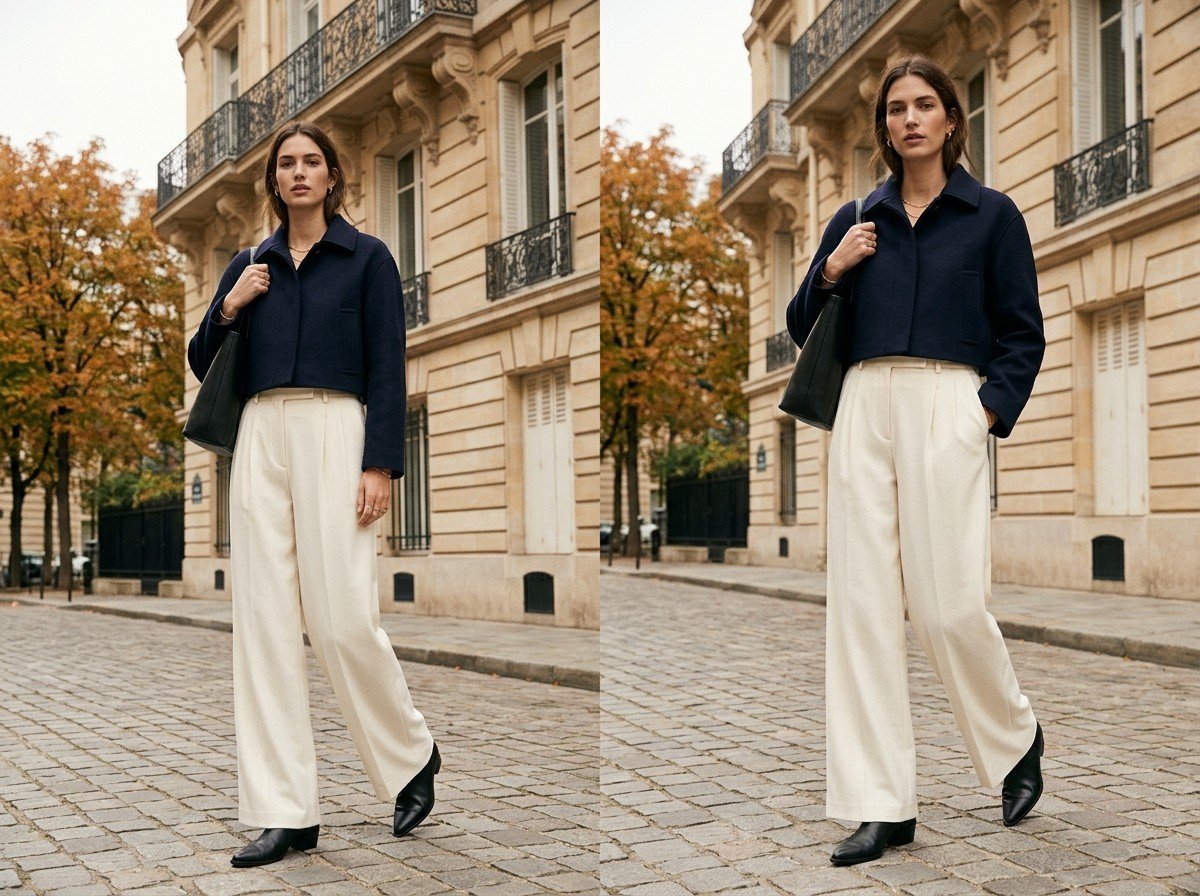
- The High-Rise Anchor Point: The waistband of a tailored wide-leg trouser should sit at the narrowest part of the torso, typically 2 to 3 centimeters above the belly button. This positioning visually adds vertical inches to the legs while establishing a high center of gravity. Low-rise wide-leg pants visually shorten the legs and widen the lower torso, causing the fabric to drag unflatteringly.
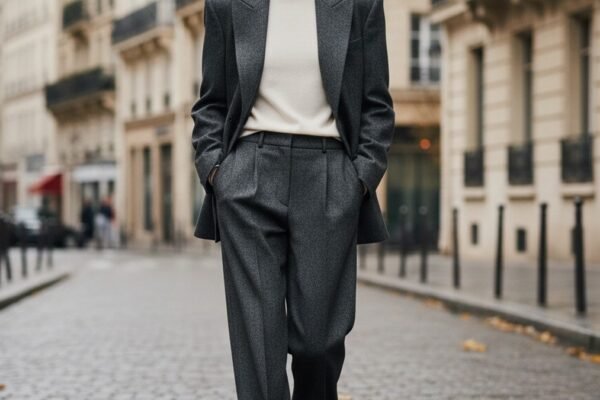
- Forward Pleats vs. Flat Fronts: A flat-front wide-leg trouser can pull across the hips when seated, causing horizontal tension lines. Forward-facing single or double pleats (opening inward toward the fly) allow the fabric to expand comfortably across the pelvis while preserving a sharp vertical crease down the center of each leg. This pressed crease acts as a visual plumb line, drawing the eye upward. Historical examples of this technique can be studied in the Costume Institute tailoring collection.
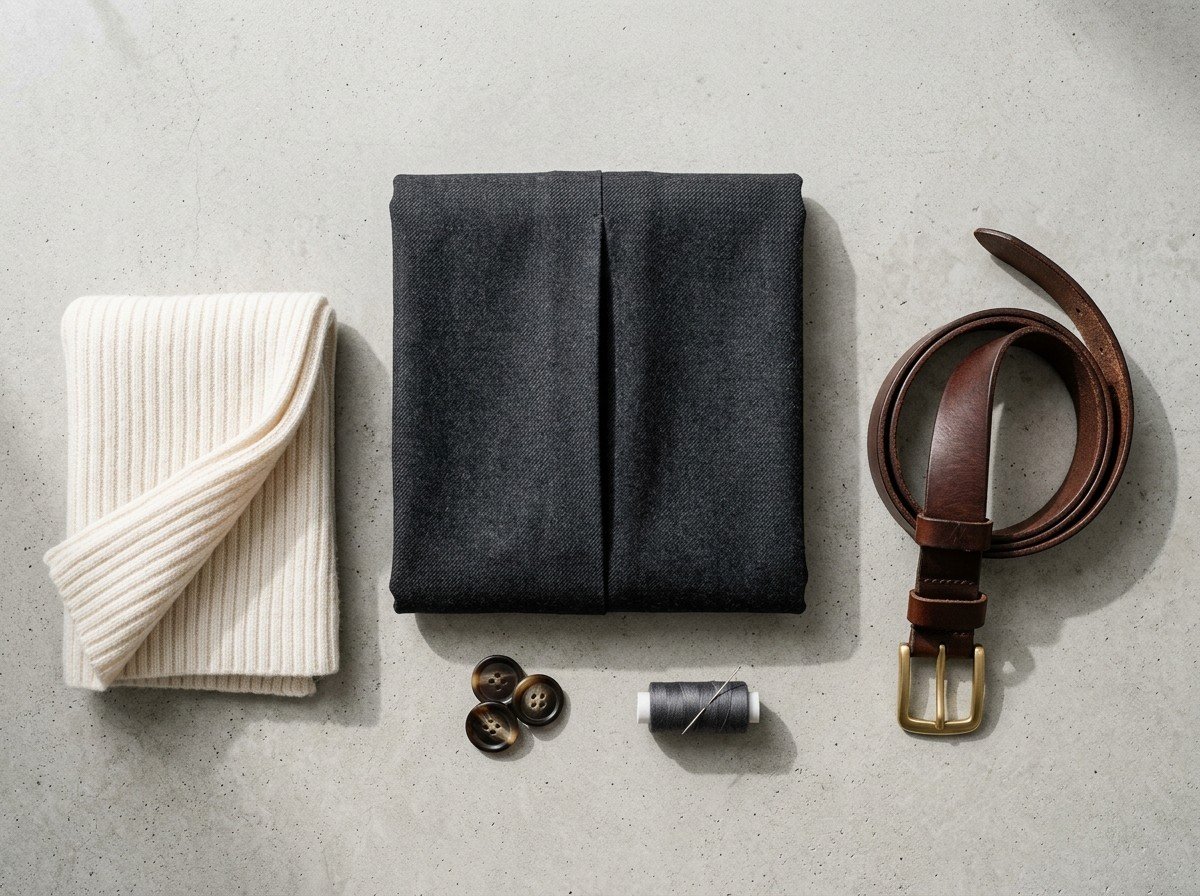
- Fabric Weight and Textile Physics: Flimsy synthetic crepe or lightweight cotton blends fail because they lack gravitational mass. As you walk, lightweight trousers cling to the thighs and billow unpredictably. True tailoring requires 340 to 420 GSM wool flannel, high-twist tropical wool, or heavy Belgian linen sourced from Responsible Wool Standard certified mills. The weight of the textile pulls the leg straight down, maintaining clean drape in motion.
The Footwear Break Science: Hemlines, Sole Heights, and Toe Shapes
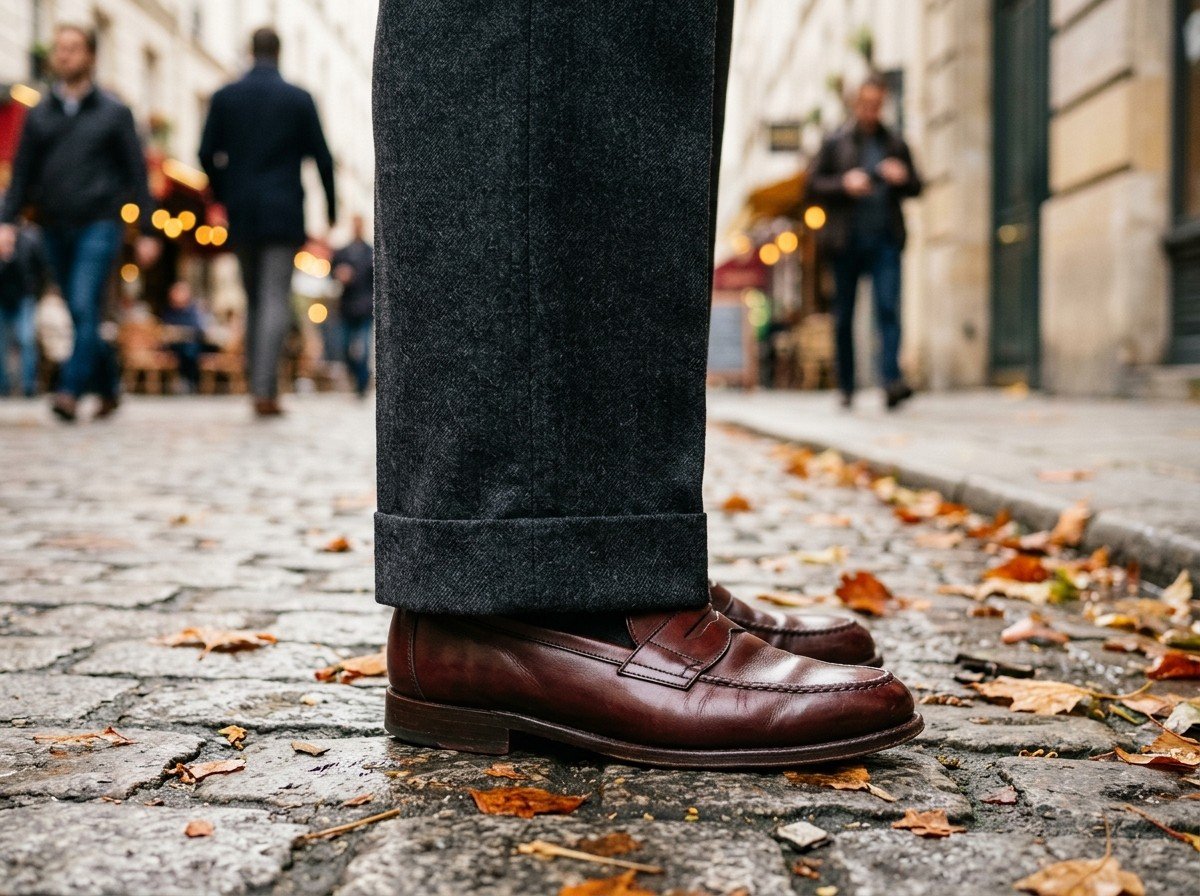
The intersection where trouser hem meets shoe sole makes or breaks the wide-leg silhouette. A millimeter too long, and your hem drags on city pavements, fraying the fabric and collecting water. A centimeter too short, and the trousers look shrunken and boxy.
Master these three definitive rules of footwear alignment:
Rule 1: The Tailored Half-Break (The Editorial Standard)
For everyday wear with loafers, kitten heels, and low-profile sneakers, hem your trousers to skim 1 centimeter above the ground at the heel. In the front, the fabric should create a gentle single indentation (the half-break) where it rests on the shoe vamp, then flow downward without folding multiple times.
Rule 2: Pointed and Chisel-Toe Elongation
Because a wide-leg opening (typically 24 to 28 inches in circumference) covers most of the foot, round-toe ballerina flats or chunky platform shoes appear truncated. Always choose footwear with an elongated profile: almond-toe penny loafers, pointed-toe ankle boots, or sleek chisel-toe slingbacks. The pointed toe extends beyond the trouser hem, guiding the eye forward and preserving leg length.
Rule 3: Low-Profile Vintage Sneakers for Off-Duty Cool
When pairing wide-leg trousers with athletic shoes, avoid bulky, chunky dad sneakers with thick rubber outsoles. Instead, opt for slim, low-profile retro leather sneakers (such as the Adidas Samba, Gazelle, or Veja Campo) with thin vulcanized rubber soles. The slim sneaker sole keeps the ankle area clean and prevents the hem from bunching awkwardly.
10 Architectural Wide-Leg Trouser Styling Formulas
Below are 10 distinct, repeatable outfit formulas balancing upper-body structure against wide-leg fluid volume across professional, casual, and evening contexts.
01. The Sculptural Monochrome Column
Executive • Gallery Opening
Pair high-rise charcoal wool flannel wide-leg trousers with a skin-skimming fine-gauge black turtleneck knit. By tucking the knit cleanly into the waistband and defining the transition with a narrow 20mm leather belt, the wide trousers read as an elegant extension of the torso. For more monochromatic styling systems, read our comprehensive guide to quiet luxury styling formulas.
Luncheon • Spring Transition
Cropping the outer layer at the natural waist is the most foolproof method to balance wide-leg volume. A boxy, collarless navy bouclé or tweed jacket frames high-waisted ecru wool trousers, letting the fabric fall in two majestic white columns without swallowing your frame.
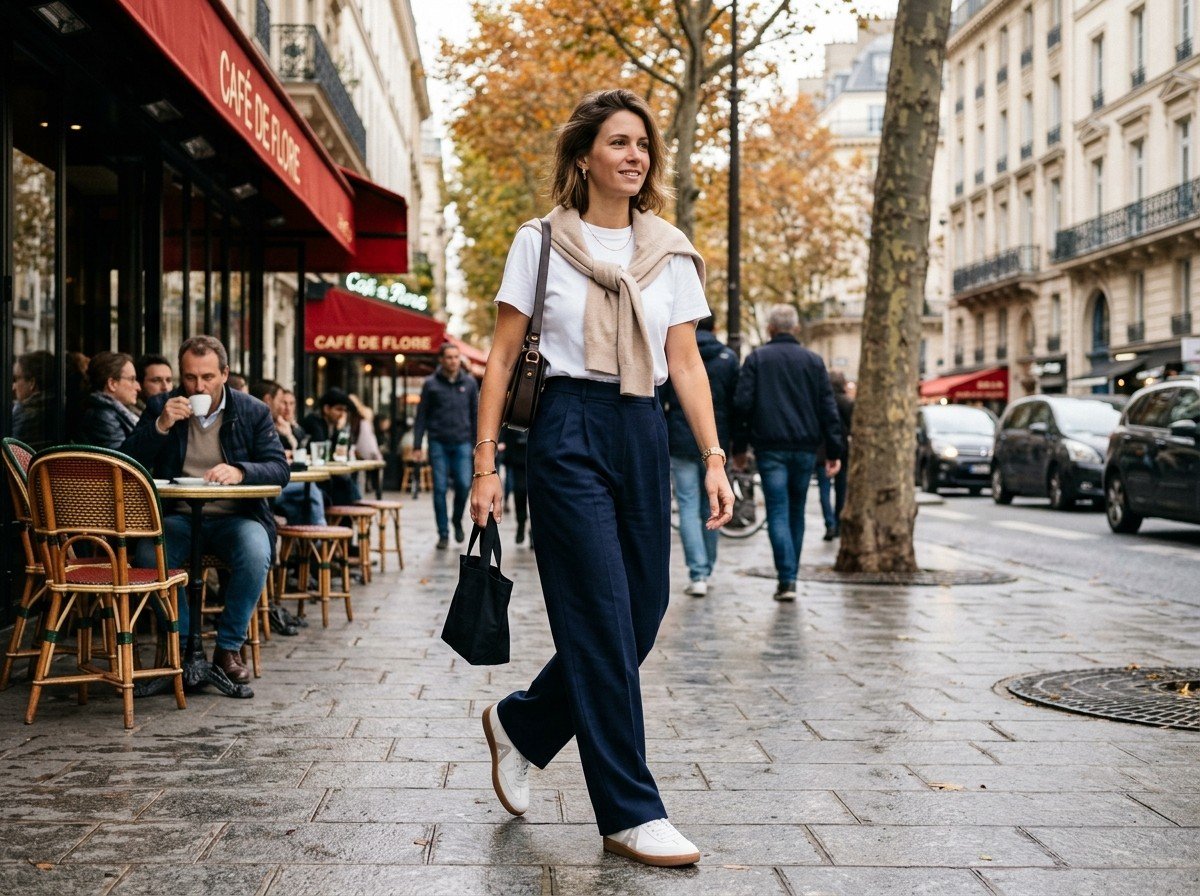
Weekend • Travel • Sidewalk Cafe
Dressing down tailoring with athletic footwear is the signature uniform of Parisian style directors. Pair fluid navy wool wide-leg trousers with a tucked heavy 240 GSM organic white cotton t-shirt. Tie an oat cashmere sweater diagonally across your shoulders and finish with low-profile retro white sneakers. To explore full seasonal capsule wardrobes, check our Parisian capsule wardrobe blueprint.
Summer Corporate • Creative Executive
Worn without an inner shirt, a fitted tailored wool waistcoat vest becomes a sharp, sleeveless architectural top. Paired with coordinating double-pleat wide-leg trousers in slate gray, this outfit creates a seamless two-piece suit silhouette that commands attention while remaining breathable. For additional under-jacket layering ideas, see our guide on architectural layering under blazers.

Studio • Client Presentation
An oversized menswear cotton poplin shirt can overwhelm wide-leg pants if left untucked. The French tuck (tucking only the front central hem into the waistband while letting the back drape loosely) creates a sharp diagonal line across the hips that reveals the trouser pleats while preserving relaxed ease.
Boardroom • Formal Power Dressing
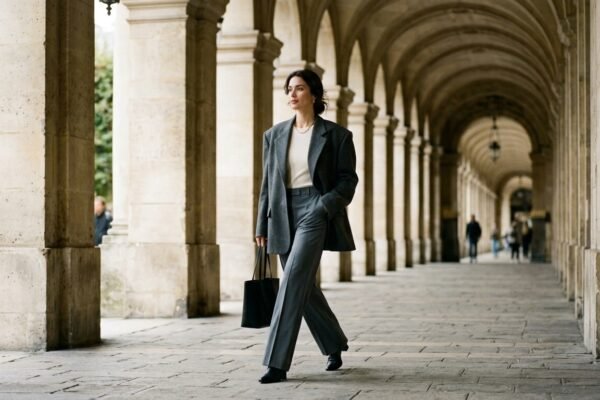
Wearing an oversized blazer over wide-leg trousers requires precise shoulder engineering. The blazer must have sharp, structured internal pads that extend slightly beyond your natural shoulder line. This broad shoulder creates an architectural V-taper down to the waist, balancing the dramatic trouser volume below without collapsing into slouchiness.
Urban Autumn • Transit • London Street
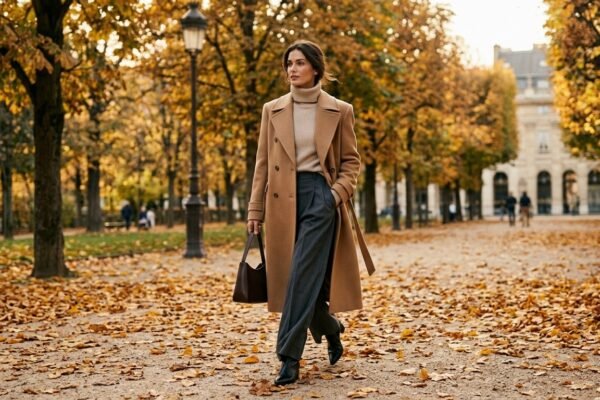
On chilly autumn days, layer a calf-length double-faced wool overcoat left unbuttoned over fluid wide-leg trousers. As you walk, the coat panels part, revealing the high-rise waistband and pleated trouser front while adding sweeping movement. Ground the look with chisel-toe leather boots that extend cleanly beyond the trouser cuffs.
Warm Resort • Coastal Dining
Warm weather demands breathable textiles that maintain structural poise. Select 320 GSM heavy Belgian linen trousers in natural oatmeal. The heavy linen weave provides necessary weight to drape without clinging. Pair with a sandwashed 22-momme silk camisole and leather slide sandals for relaxed coastal sophistication.
Creative Weekend • Architectural Studio
Wide-leg denim works best when tailored with trouser details: a trouser waistband with belt loops, slash front pockets, and a clean pressed center crease rather than five-pocket western styling. Choose unwashed 13.5 oz Japanese selvedge denim in raw indigo, paired with a tobacco brown suede chore jacket. Discover sustainable denim ateliers in our dossier on independent minimalist clothing brands.
Black Tie Optional • Opera • Private Gala
For formal eveningwear, replace standard cocktail gowns with wide-leg tuxedo trousers cut from high-twist wool with silk satin side braids. Pair with a draped ivory silk halter top and sharp 75mm pointed stiletto pumps. The fluid silk braids reflect candlelight, referencing classic twentieth-century couture documented in the Museum at FIT fashion archives.
The Wide-Leg Footwear Pairing Matrix
To eliminate guesswork when hemming and pairing trousers with shoes, reference our editorial footwear matrix:
| Shoe Silhouette | Toe Shape Rule | Ideal Hem Clearance | Break Type | Editorial Verdict |
|---|---|---|---|---|
| Penny Loafers | Almond or chisel toe | 1.0 cm above sole | Slight half-break | Essential daily pairing |
| Pointed Ankle Boots | Razor-sharp point or blade | 0.5 cm above floor | Clean drape / No break | Maximum leg elongation |
| Low-Profile Sneakers | Slim vintage gum sole | 1.5 cm above floor | Gentle contact break | Off-duty casual standard |
| Kitten Heel Slingbacks | Elongated pointed toe | 1.0 cm above ground | No-break floating hem | Cocktail & dinner authority |
| Chunky Lug-Sole Boots | Heavy round toe | Variable / Poor break | Messy crumple | Avoid: Disrupts drape |
The 3 Common Proportion Mistakes (And Architectural Fixes)
Mistake 1: The “Double Oversized” Silhouette Trap
Pairing an oversized slouchy tunic sweater with voluminous wide-leg pants eliminates your waistline, creating an amorphous rectangular mass. Architectural Fix: Keep one half of the body structured. If wearing wide trousers, tuck your knitwear into the front waistband, cinch with a narrow belt, or choose a fitted fine-gauge knit to define the upper torso.
Mistake 2: Buying Single Inseam Lengths for Multiple Shoe Heights
A trouser hemmed for 85mm stiletto heels will drag on the ground when worn with flat loafers. Conversely, trousers hemmed for sneakers will appear awkwardly short with high heels. Architectural Fix: Designate each pair of wide-leg trousers for a specific footwear category. Dedicate one pair hemmed for flat loafers and sneakers (1 cm above floor), and a second pair hemmed for 50mm to 75mm heel boots.
Mistake 3: Selecting Flimsy, Low-GSM Synthetic Fabrics
Lightweight 100% polyester wide-leg pants lack gravitational tension. When you take a stride, the cloth ripples and collapses around your knees rather than maintaining an architectural cylinder. Architectural Fix: Prioritize natural wool flannel, wool gabardine, or heavy linen weighing at least 340 GSM. The weight of the natural fiber ensures the trouser leg hangs perpendicular to the earth.
Robert Leatherman on Tailoring Discipline
“The secret to wide-leg trousers is not height or body shape; it is tailoring courage. Most women buy trousers off the rack and accept the standard factory hem length. Take your trousers to an alteration tailor while wearing the exact shoes you intend to style them with. Ask for a clean half-break with 1 centimeter of clearance above the heel sole. When the hem floats with millimeter precision, wide-leg trousers will instantly become the most commanding garment in your wardrobe.”
Robert Leatherman
Frequently Asked Questions
Can petite women wear wide-leg trousers without looking shorter?
Yes. Petite women benefit immensely from wide-leg trousers when following the high-rise rule. Select a high-rise waistline that sits firmly above the navel, tuck tops in completely, and choose trousers with pressed center pleats. Pair with pointed-toe boots or nude kitten heels where the hem skims just above the floor. This creates an uninterrupted vertical line from waist to toe, adding visual height.
What coat length looks best over wide-leg trousers?
Two extreme lengths work best: either a cropped jacket hitting directly at the waistband bone, or a long, calf-skimming overcoat (hitting mid-calf to ankle). Mid-length coats that end at the hip or knee cut the body into awkward halves and fight with wide-leg volume.
Should wide-leg trousers be cuffed or uncuffed?
A 4 to 5 centimeter tailored turn-up cuff adds physical weight to the bottom hem, which enhances the drape of wool flannel and heavy linen trousers. However, if you are petite (under 5 feet 4 inches), choose a plain, uncuffed blind stitch hem to avoid breaking the vertical sightline.
How wide should the leg opening actually be?
For a balanced, timeless silhouette that avoids looking like a costume flare, look for a leg opening circumference between 22 and 26 inches (measured across the bottom hem laying flat, 11 to 13 inches wide). This provides dramatic movement without impeding natural strides.