
Most jeans are cut on a straight block: the hip and the waist are graded together, a fixed number of inches apart. A pear-shaped body breaks that rule by four, sometimes five inches. So the waistband gapes at the back while the hips pull tight, and the fault lands on your body when it belongs to the pattern.
This guide covers the best jeans for a pear shaped body: which cuts work, which rise to choose, how much stretch to allow and which fit faults a tailor can fix. It is written for the shop floor. Take it with you, try on in the right order, and you will leave with a pair you actually wear.
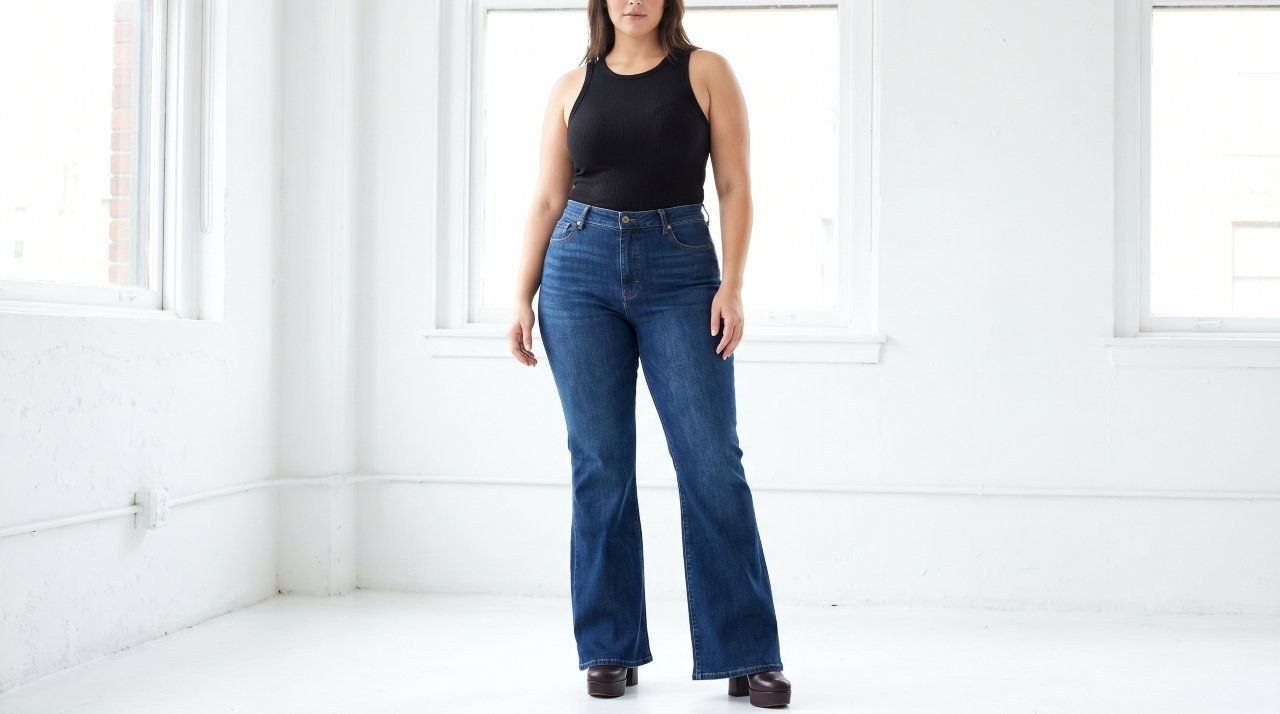
The best jeans for a pear shaped body are high-rise (10 to 11.5 inches) in a bootcut, wide-leg, straight or flared leg. These cuts open from the knee down, so the leg balances the hip instead of hugging it. Choose a curve fit or a brand that grades the waist smaller than the hip, a dark or mid-blue wash without heavy whiskering at the thigh, and 1 to 2 percent elastane for comfort without bagging. Skinny jeans, low rises and pale washes with fading across the hip work least well.
Key Takeaways
Buy for the hip, tailor the waist
Fit the widest part of your body first. A tailor can take in a waistband by up to 1.5 inches; nobody can add room across the seat.
Let the leg open below the knee
Bootcut, flare and wide-leg lines widen as the hip narrows to the knee, so the whole silhouette reads as one balanced column.
Keep stretch at 2 percent or less
Rigid or near-rigid denim holds its shape through the day. High-stretch blends relax by lunch and sag at the seat.
Why Pear Shapes Fight Standard Jeans
A pear shape carries more width at the hip and upper thigh than at the waist and shoulder. The usual working definition is a hip measurement at least 9 to 10 inches larger than the waist. Standard denim patterns often assume a gap of about 8 to 9 inches, which is where the trouble starts.
The result is familiar. A pair that closes over the hip leaves a hand-wide gap at the back waistband. A pair that fits the waist will not pass the thigh. Neither problem means your body is wrong. It means the jeans were built for a different ratio.
Two fixes exist. Brands now sell “curve” fits with a deeper waist-to-hip difference, usually a 10 to 12 inch gap. Or you buy for the hip and have the waist taken in. Both work, and the second opens up far more brands.
The Best Cuts for a Pear Shaped Body
Bootcut: the quiet workhorse
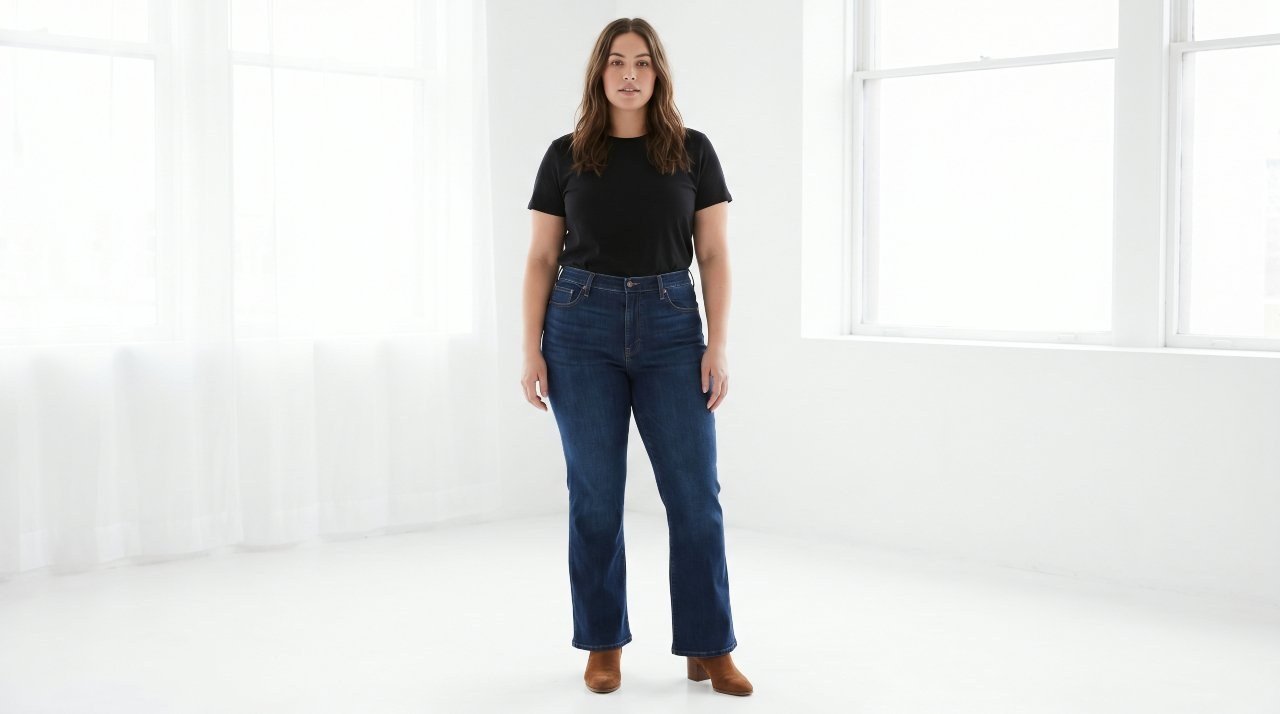
A bootcut is fitted through the thigh and opens gently from the knee, usually to a 17 to 19 inch hem. That small flare is enough to balance the hip without looking like a costume. In dark indigo with a 10.5 inch rise, it is the single most reliable cut for this shape.
Wear it long. The hem should graze the top of the shoe, with a heel or a chunky boot sole underneath. Cropped bootcuts cut the leg at its widest point and lose the effect.
Wide-leg: the most forgiving line
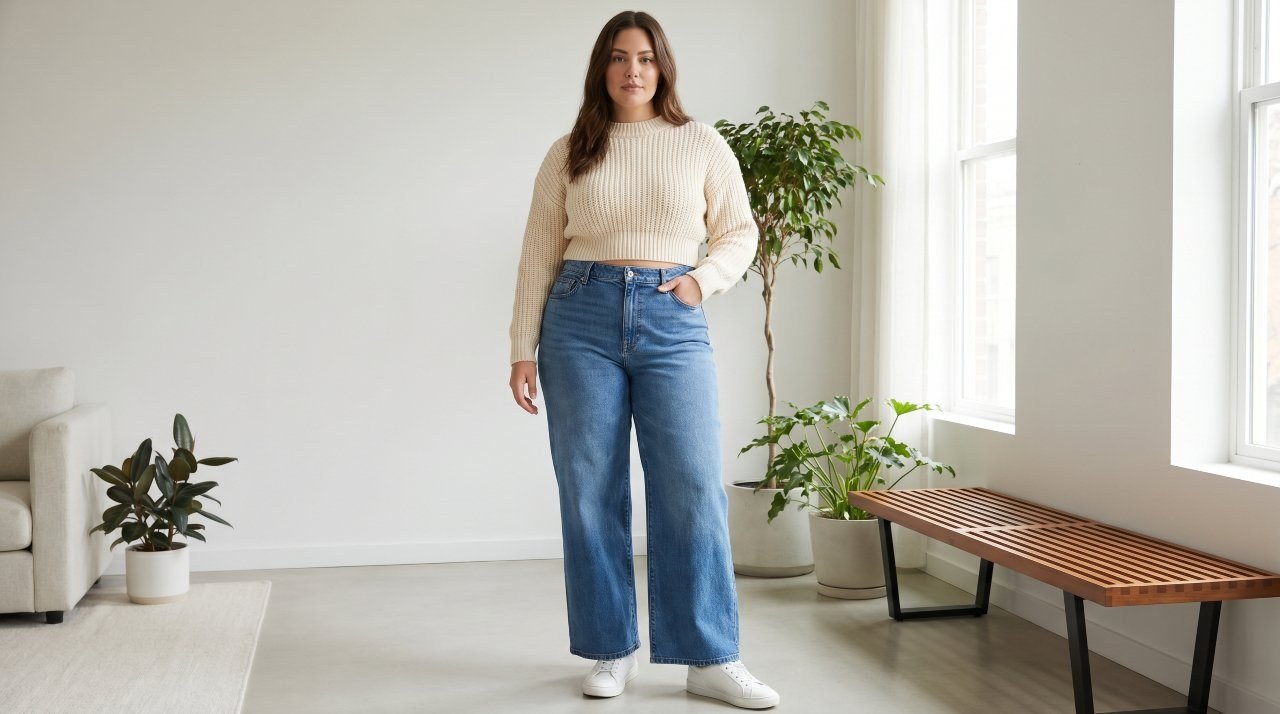
A wide-leg jean falls straight from the widest point of the hip. It skims the thigh rather than holding it, so the leg reads as one long column. Choose a heavier denim, around 12 to 14 ounces, so the fabric hangs instead of clinging.
A wide-leg cut needs a defined waist to avoid looking boxy. Tuck the top, or wear a cropped knit that ends at the waistband. Our guide on how to style wide-leg trousers covers the proportions in more detail, and they apply to denim too.
Straight leg: clean, if you size for the thigh
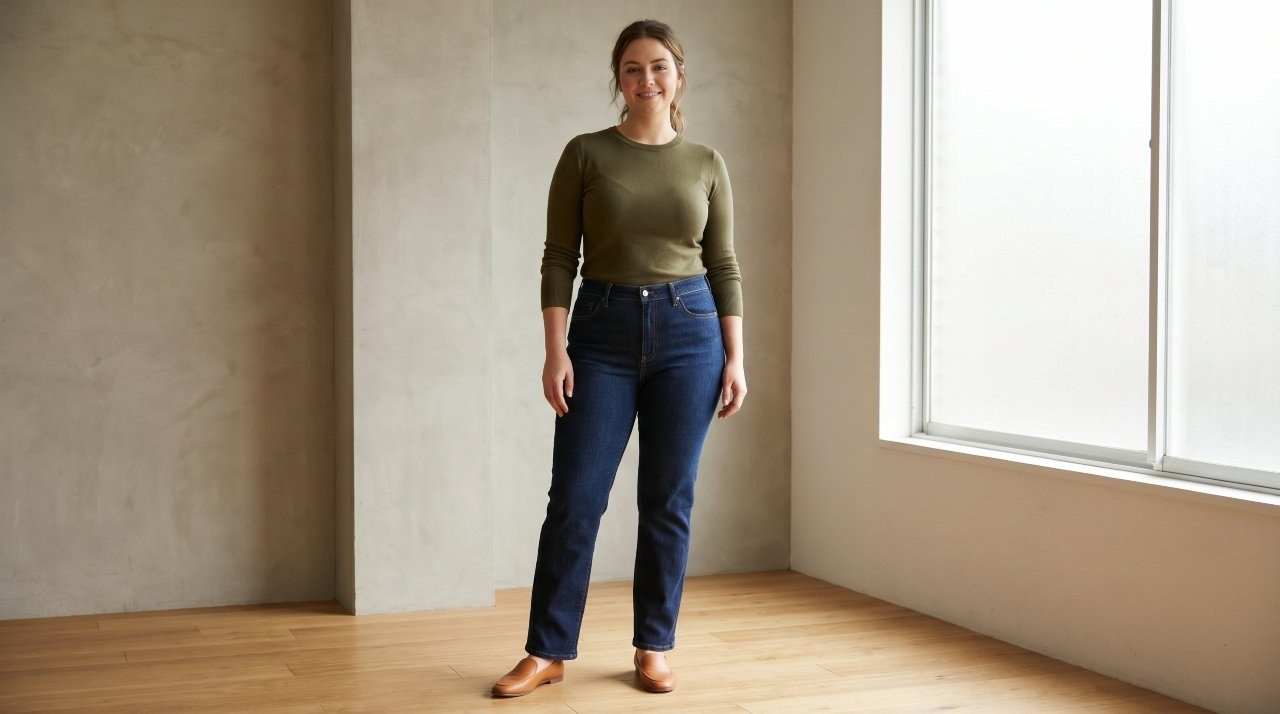
A straight leg keeps the same width from knee to hem. On a pear shape it works when the thigh has a little ease, about half an inch of pinch on each side when standing. Too tight, and it turns into a slim jean that cups the hip.
Look for a straight leg with a 15 to 16 inch hem and a full length. Ankle crops can work in summer, but they shorten the leg, so pair them with a pointed flat or a low block heel.
Flare: the evening cut
A full flare is fitted to the knee and opens wide, often past 20 inches. It is the strongest visual counterweight to a full hip, and it lengthens the leg more than any other cut when worn over a platform or heel. Save it for days when you plan your shoes in advance, because a flare in flat sandals drags on the ground.
| Cut | Leg Opening | Ideal Rise | Best Shoe | Why It Works |
|---|---|---|---|---|
| Bootcut | 17 to 19 in | 10 to 11 in | Heeled ankle boot | Small flare balances the hip |
| Wide-leg | 20 in plus | 10.5 to 12 in | Platform loafer, clog | Skims the thigh in one column |
| Straight leg | 15 to 16 in | 10 to 11 in | Pointed flat, block heel | Clean line if the thigh has ease |
| Flare | 20 in plus | 10.5 to 11.5 in | Platform, heel | Strongest counterweight to the hip |
| Skinny | 10 to 12 in | Any | Rarely flattering | Tapers to the ankle, enlarges the hip |
The Rise Matters More Than the Leg
The rise is the distance from the crotch seam to the top of the waistband. It decides where the jeans sit and how they handle the curve between waist and hip.
A high rise of 10 to 11.5 inches sits at or just below the natural waist. That is the sweet spot for most pear shapes. It covers the high hip, defines the narrowest part of the torso and gives the hip a smooth line instead of a shelf.
A mid-rise of 9 to 9.5 inches can work if you have a short torso. Low rises under 8.5 inches almost always fail: they sit on the widest part of the hip, which is exactly where you do not want a horizontal line.
Fabric, Stretch and Weight
Denim composition decides how a jean behaves by the end of the day. Here is how to read the label.
- 100 percent cotton (rigid): holds its shape best and moulds to you over weeks of wear. It feels stiff at first. Size for the hip with almost no ease, because it will relax about half a size.
- 98 to 99 percent cotton, 1 to 2 percent elastane: the best balance for a pear shape. It gives at the thigh when you sit and recovers well.
- Above 2 percent elastane: comfortable in the fitting room, but it tends to grow out at the seat and knee. Avoid for wide-leg and bootcut cuts.
- Weight: 12 to 14 ounce denim hangs straight and hides the outline of the thigh. Lightweight denim under 10 ounces clings and creases.
Where the cotton came from matters too. If you want to know how your jeans were made, the Fashion Revolution transparency index tracks how openly major brands report on their supply chains.
Washes and Details That Help
Colour can shift attention as much as cut. A dark rinse or deep indigo recedes and makes the leg look longer. Mid-blue works well too, if the shade is even.
Be careful with fading. Heavy whiskers at the upper thigh and light patches across the hip act as highlights, drawing the eye to the place you might want to quiet. A clean, uniform wash is the safer buy.
Pockets matter more than people think. Larger back pockets, set slightly closer together and placed higher on the seat, make the hip look smaller. Tiny pockets set wide apart do the opposite. Skip flap pockets and heavy embroidery on the back.
Fixing the Common Fit Problems
- The back waistband gaps: the most common issue. A tailor can add a centre-back dart or take in the waistband by up to 1.5 inches. Expect to pay a modest alteration fee; it is the best money you will spend on denim.
- Too tight at the thigh, fine at the waist: size up and tailor the waist. Never squeeze the thigh, because the fabric strains, fades and pulls the side seams forward.
- The hem is too long: have it shortened with the original hem reattached, so you keep the factory finish. Hem bootcut and flare cuts while wearing the shoes you plan to wear most.
- The crotch sags: usually a sign of too much stretch or too large a size. Go down a size in a lower-stretch fabric.
Cuts That Rarely Work, and How to Make Them Work
Skinny jeans taper to the ankle, so the widest point of the outfit becomes the hip. If you love them, balance the top half with a longer jacket that ends below the hip, or a structured shoulder.
Baggy boyfriend and barrel cuts can add volume in the wrong place, especially in pale washes. If you want the relaxed look, choose a barrel leg with a high rise and a dark rinse, and tuck the top in to keep the waist visible.
How to Style Jeans for a Pear Shape
The goal is balance between top and bottom. You do not need to hide the hip; you need the shoulders and the waist to take part in the outfit.
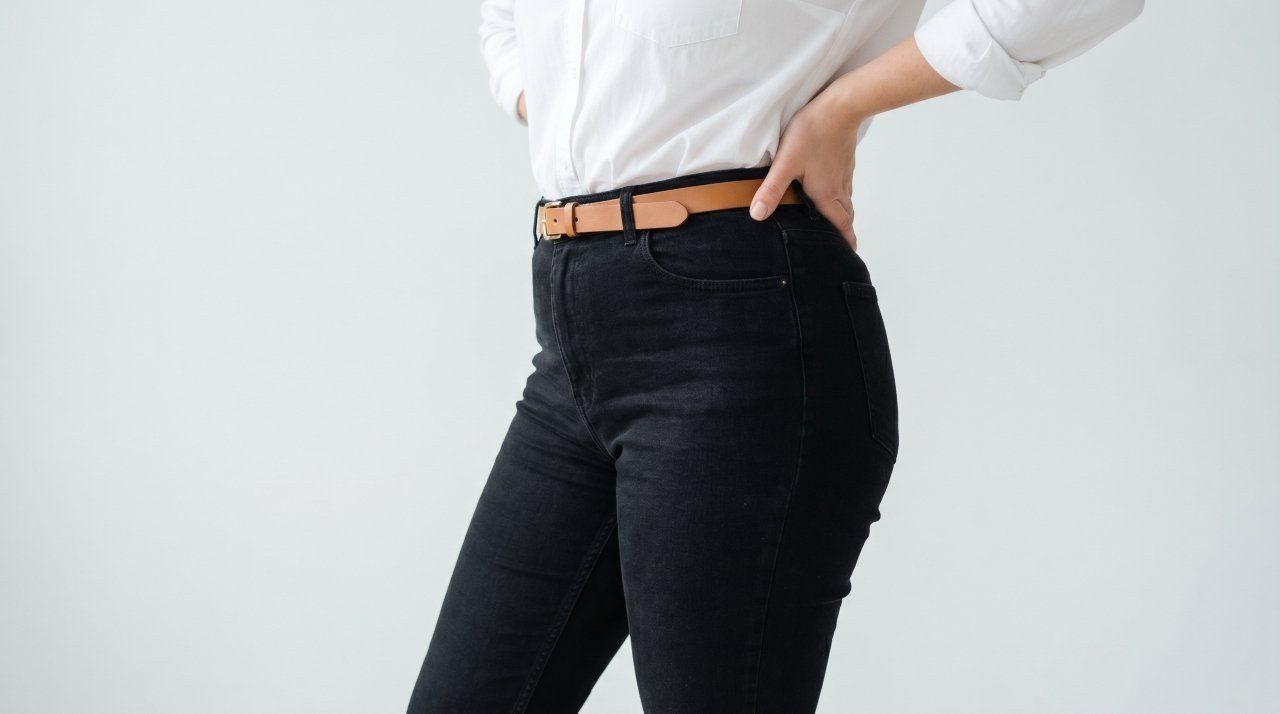
- Define the waist: Tuck shirts, wear a slim leather belt or choose cropped knits that end at the waistband.
- Build the shoulder: Structured blazers, boat necks and square necklines add width above to match the hip.
- Lengthen the line: A pointed shoe, a small heel or a hem that covers the shoe makes the leg look longer.
- Keep the top lighter: A cream or white top with dark jeans moves the eye up toward the face.
A blazer worth owning for this shape ends just at or below the widest point of the hip. Anything that stops halfway across the hip cuts a line there. If you wear jackets often, see our notes on how to style an oversized blazer, which covers length and shoulder in depth.
For a casual uniform, try a crisp white shirt half-tucked into dark bootcut jeans with a tan belt and pointed loafers. For evening, a fitted black knit, wide-leg indigo jeans and a platform sandal.
Shopping Tips That Save Time
- Measure your waist and the fullest part of your hip before you shop. Compare the difference with each brand’s size chart.
- Try on three sizes of the same style, not three styles in one size. The right size first, then the right cut.
- Look for the words “curvy”, “curve fit” or “contour” on the label. They mean a bigger waist-to-hip difference.
- Check the back view in a three-way mirror. Most fit problems on a pear shape are at the back.
- Buy for the hip and budget for a tailor. Denim alterations are routine and inexpensive.
For a deeper read on how denim became a wardrobe staple, The Met’s Costume Institute collection archive holds pieces that trace the jean from workwear to fashion.
Frequently Asked Questions
What jeans look best on a pear shaped body?
High-rise bootcut, wide-leg, straight leg and flared jeans look best. They balance the hip by opening below the knee and define the waist with a rise of 10 to 11.5 inches.
Should pear shapes wear skinny jeans?
They can, but skinny jeans make the hip the widest point of the outfit. Balance them with a longer jacket or a structured shoulder, and choose a dark wash.
What rise is best for a pear shape?
A high rise of 10 to 11.5 inches is best for most pear shapes. It sits at the natural waist and smooths the curve from waist to hip.
How do I stop jeans gapping at the back?
Buy a curve-fit style with a smaller waist-to-hip ratio, or buy for your hip and ask a tailor to take in the back waistband with a centre dart.
What jean colour is most flattering for a pear shape?
Dark rinse and deep indigo are the most flattering, because they recede and lengthen the leg. Avoid heavy fading on the thigh and hip.
The Short Version
Fit the hip first, choose a high rise, let the leg open below the knee and keep the stretch low. Then hand the waistband to a tailor. A pear shape is easy to dress in denim once you stop asking straight-block jeans to do a job they were never cut for.